

Thank you for Subscribing to Food Business Review Weekly Brief

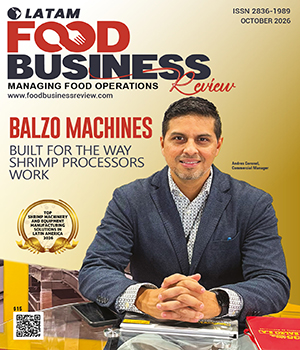
Shrimp processing is a race against time. Processors must maintain an unbroken cold chain while handling high volumes with speed and precision to preserve product quality and remain competitive. At the same time, shifting export markets, evolving product formats, and changing customer demands often require production lines to adapt within facilities that cannot simply be rebuilt. Meeting these realities calls for engineering solutions that work with existing operations while supporting future growth. Helping processors meet those challenges isBalzo Machines, an Ecuador-based manufacturer that designs and manufactures customized processing equipment that aligns with each customer's production goals, available space, and workflow. Every solution is engineered around the processor's operational reality, enabling higher productivity, improved sanitation, lower maintenance requirements, safer working environments, and long-term operational efficiency without requiring facilities to be redesigned. “Our goal is to help our customers achieve their production goals, and every machine we design is built with that purpose in mind,” says Andres Coronel, commercial manager. Turning that philosophy into reality begins long before manufacturing. Every project begins with understanding how the customer's facility operates before engineering teams conduct site visits, gather operational requirements, and develop the initial design. Through 3D modelling, virtual design reviews, and continuous collaboration, customers can evaluate and refine the proposed solution before manufacturing begins. This process ensures equipment integrates seamlessly into each processing environment, with individual machine configurations adapted to suit available space and downstream processing requirements. The result is a portfolio of equipment designed to improve productivity across every stage of shrimp processing. Its flagship grading machines combine high-speed operation with exceptional precision, allowing processors to accurately sort shrimp while maintaining the throughput needed to preserve the cold chain and product quality. The company also develops washing systems that efficiently sanitize trays, crates, and logistics containers to reduce microbiological risks and cross-contamination. Automated conveyor systems support beheading and peeling operations by maintaining a continuous product flow, while cooking equipment uses automated temperature and speed controls to deliver consistent results. All solutions maximize productivity while safeguarding quality, sanitation, and worker safety.
Condiments & Sauces
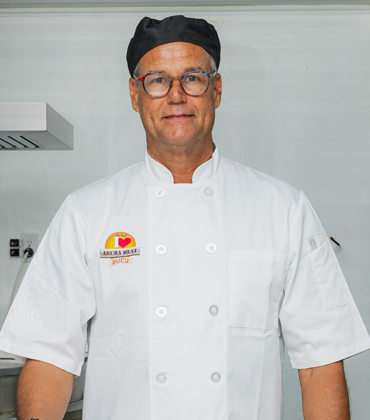
Most visitors leave Aruba with a souvenir to remember the island by. Nearly two decades ago, Aruba Heat set out to ensure they also left with its flavors. Inspired by the condiments and tropical flavors found on Aruban tables for generations, the brand began crafting artisan hot sauces that celebrate the island's vibrant food culture. Today, Aruba Heat reaches kitchens across North America and Europe, carrying the flavors of Aruba far beyond its shores. Aruba's cuisine reflects a distinctive blend of Caribbean, Latin American and Dutch influences, which underpins every recipe in the portfolio. From an initial lineup of three sauces, Aruba Heat has expanded its range to nine offerings. Tropical fruits such as papaya, mango, pineapple and the recently introduced dragon fruit are paired with carefully selected Habanero and Scotch Bonnet peppers to create balanced sauces across a range of heat levels. Developed to complement food, each recipe balances sweetness, fruit and spice. “A hot sauce should always be enjoyable rather than intimidating,” says Chef Michel Frank, managing director, owner and founder. “Our recipes are built around flavor first. When the heat fades, the flavor should still linger.”
Foodservice Equipment

Buffet equipment has to do more than hold and serve food. Its performance affects how efficiently a line operates, how well food is maintained and how customers perceive what is being served. For operators making a long-term equipment investment, those considerations shape both the operation and the experience it creates. For Glasart, presentation is more than an aesthetic consideration. It treats design as a revenue tool for clients, engineering equipment that frames food effectively while supporting temperature control, hygiene and efficient service. “We engineer for the people who use the equipment every day, not just for the people who admire it,” says Alexis Facchina, commercial director.
Food Processing and Packaging
Mexico’s avocado harvest generally runs from September through May, yet retailers, food-service operators and food manufacturers need oil year-round, in bulk and with the certifications each market requires. OleoLab closes this supply gap through a network of crude oil extraction plants—three in Mexico, one in Colombia and one in Peru—which supply its refinery in Mexico. This network lets the company keep most of the process in-house, from buying the fruit through refining and bottling. “We handle the whole process, from buying the fruit to bottling the product,” says Armando Espinoza, CFO. That control matters most for organic oil. Because OleoLab manages its own certifications and process controls, customers get full traceability from the orchard to the bottle. During the season, OleoLab buys fruit, processes it into crude oil and stores it for the lean months, paying growers in advance and absorbing the working-capital burden itself. 100% Avocado, Tailored Profiles Every oil OleoLab produces is 100% avocado. Control over sourcing and processing allows the company to develop specialized avocado oil profiles for specific customer needs, rather than relying on a single standard product. A key example is fractionated avocado oil for food service and industrial frying. Through fractionation, OleoLab adjusts the oil’s composition to deliver greater thermal stability, making it well-suited to high-temperature and extended frying in restaurants, fast-food chains and snack production. Customers get the performance they need in the fryer while keeping a clean, single-ingredient label. OleoLab also produces private-label avocado oil for major retail chains. Its own brand, Avocare, sells through 11 Mexican retail chains, including Walmart, Sam’s Club, Soriana and HEB, and recently entered the U.S. through a new Sam’s Club deal.

Marketing

Leveraging Geomarketing Analytics In Food Retail For Strategic Decision-Making
Marcus Vinicius Velleca Bernardi, Head Of Data And Analytics, Daki
Coffee And Tea
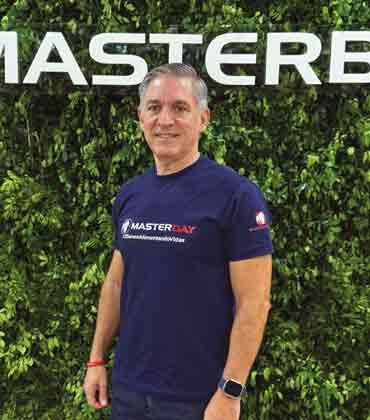
The Path to Technological Leadership in Food Processing
Washington Franco, Corporate Information Technology Manager, Masterboi
Food and Beverages Marketing
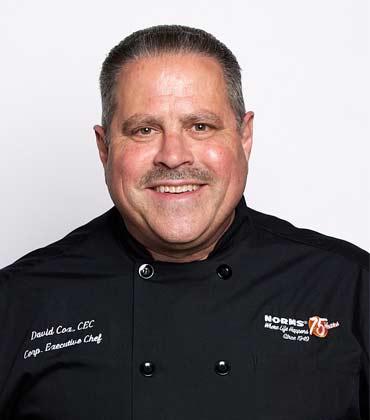
Scaling Menu Innovation Through Smarter Procurement Strategy
David Cox, Corporate Executive Chef/VP of Food & Beverage, Norms Restaurants
Supplement Manufacturing

What High-Performing Kitchens Get Right that Equipment Can't Fix
Michael Vaughn, Corporate Executive Chef, Parable Hospitality
Food Processing and Packaging

Driving Success in Food Manufacturing Engineering
Fernando Garcia Vidal, Vice President of Engineering, Monogram Foods

IN MY OPINION
Alternative Proteins
Navigating F&B Compliance
Erica Justolin, Director - Legal and Compliance, Delly’s Food Service

LAST WORD
Coffee And Tea
Livestock Traceability: The Challenges and Progress for Minerva Foods in South America
Tamara Lopes, Corporate Executive Sustainability Manager, Minerva Foods
IN FOCUS
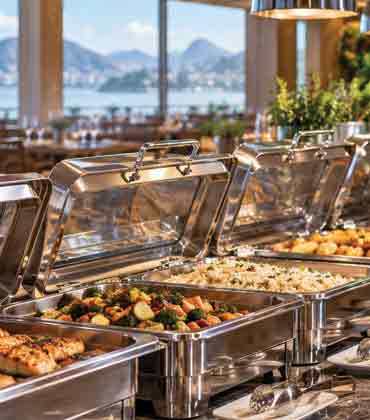
Driving Hospitality Excellence with Foodservice Buffet Equipment Manufacturers in Latin America
Foodservice buffet equipment manufacturers enhance hospitality through innovation, efficiency, sustainability, intelligent technology, flexibility, and reliable performance.
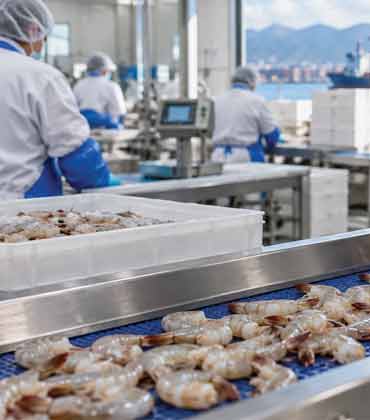
Latin America's Seafood Success: Enhancing Shrimp Processing with Advanced Equipment
Modern shrimp processing equipment improves yield consistency, efficiency, food safety and sustainability, helping Latin American processors deliver high-quality products with reliable performance.
EDITORIAL
Inside The Evolution of Food Operations
The food industry is shaped by a constant balance between quality, efficiency and the experience delivered to the customer. This edition of Food Business Review Latin America explores how manufacturers and foodservice specialists are applying technical discipline, thoughtful design and product innovation to meet those demands.
Our cover story recognizes Balzo Machines as the Top Shrimp Machinery And Equipment Manufacturing Solutions in Latin America 2026. The recognition emphasizes its relevance in this particular niche industry, where the machines and equipment are very significant in the process of food manufacturing.
This edition also includes businesses showing how specialization can help to create unique value in food and food service operations. Aruba Heat, recognized as the Top Artisan Hot Sauce Manufacturer in Latin America 2026, has built its portfolio around Aruba’s culinary identity. Combining tropical fruits with carefully selected peppers, disciplined small-batch production and customer-led product development, the company is expanding its flavor-first approach beyond the island.
Glasart, named the Top Foodservice Buffet Equipment Manufacturer in Latin America 2026, approaches buffet equipment as both an operational and commercial consideration. Its thermoelectric glass technology, modular configurations and consultative design process help foodservice operators balance presentation, temperature management, hygiene and efficient service.
Our contributors bring further operational perspective to this edition. Michael Vaughn, Corporate Executive Chef at Parable Hospitality, argues that high-performing kitchens depend less on equipment alone than on flow, leadership, culture and disciplined maintenance. Fernando Garcia Vidal, Vice President of Engineering at Monogram Foods, emphasizes that efficiency must never come at the expense of safety, food safety or quality, while identifying operational efficiency as a foundation for reducing waste.
Together, these perspectives show that progress in food business comes from connecting technical capability with disciplined execution. We invite you to explore this edition and examine the ideas shaping more capable, efficient and durable food operations across Latin America.
