
Thank you for Subscribing to Food Business Review Weekly Brief
Packaged Food and Beverage Manufacturers Driving Innovation across APAC
Food Business Review | Tuesday, September 22, 2026
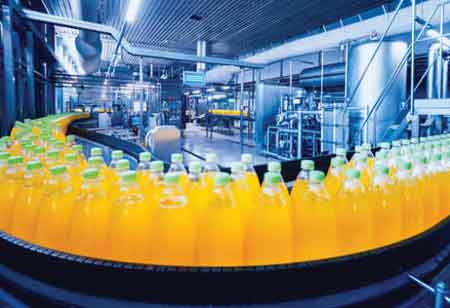
Packaged food and beverage manufacturers address consumer needs by providing the market with an extended variety of products. Manufacturers produce numerous products and items, ranging from staples to exotic delicacies. However, since customer preferences are constantly evolving, food manufacturers must adapt to the changes and invest in product development and quality. The manufacturers’ interest in product innovation, coupled with the need for high quality, is defined by evolving consumer trends and the need for efficiency in food production across APAC.
Meeting Consumer Demand through Product Innovation And Quality
Food producers must invest in the development and production of goods with diverse flavors and ingredients in order to accommodate the different tastes and dietary preferences of consumers. The development and production of high-quality food products result in competitive advantages for the producers.
In order to satisfy the needs of their clients and make them happy, manufacturers need to have quality control of their manufacturing process at each stage. The product should undergo many laboratory tests and tastings before it comes to the market, and its quality and taste comply with the requirements.
Additionally, the manufacturing process should be controlled in order to achieve high-quality products. This can be done by having quality control measures implemented. It allows maintaining customers' loyalty and their confidence in the product. Due to the increasing demand for novel food products in APAC, more emphasis is placed on quality and product differentiation by manufacturers.
Enhancing Production Efficiency through Advanced Manufacturing Technologies
Modern food manufacturers invest in new technologies in order to increase production efficiency and accommodate the rising demand for more diverse products. Manufacturers must ensure that the production process remains consistent and controlled despite high production volumes and the complexity of working with various ingredients.
Robotic technologies can take over manufacturing processes. Robots can be programmed to consistently carry out the same tasks, enabling manufacturers to ensure the highest product quality while eliminating human errors. AI and robotics are ideal for meeting the growing demand for more diverse products because they enable companies to create products, monitor production, and make necessary adjustments in real time.
Modern data processing and analytics can be employed to ensure proper utilization and maintenance of production equipment. Instead of conducting regular equipment maintenance, manufacturers can employ predictive maintenance models. The utilization of robotics and artificial intelligence helps manufacturers collect and process relevant data in real time to detect potential equipment issues. Robotic installations and smart devices can help manufacturers reduce waste and maintain all aspects of production, including the supply chain.
Advanced technologies and software can be employed to ensure an effective quality control process that supports the production of high-quality goods. Modern food manufacturers must recognize the role of such technologies in sustaining their operations and competitive advantages in the dynamic market environment.
Supporting Sustainable Growth through Responsible Manufacturing Practices
Environmental concerns are encouraging manufacturers to reevaluate current practices and invest in new initiatives that support eco-friendly and sustainable production while maintaining product quality and reducing unnecessary expenditures. The manufacturers should make sure that their activities are within the environmental constraints and take care of people, planet, and profit.
The significance of energy conservation and the reduction of waste should be considered by companies. The use of efficient energy technology and machinery will help reduce the amount of energy used and limit environmental damage. New ways to conserve energy and cut down on greenhouse emissions should be considered by manufacturers for a safer working environment. The use of green practices allows manufacturers to lower costs and continue the flow of production without any disruptions.
Sustainable water management is also at the forefront of modern manufacturers’ initiatives. Producers must find new ways to reduce water consumption and minimize the ecological footprint of manufacturing processes. For example, the utilization of water-saving technologies and innovative approaches to water management can help manufacturers reduce water usage while maintaining hygiene, safety, and product quality.
Besides, many companies are also motivated to decrease the environmental footprint of manufacturing by reducing the creation of waste and ensuring that the waste is properly disposed of. The producers use intelligent technology and improve the process of manufacturing to reduce the amount of waste created. In addition, recycling, reuse, and repurposing of products help companies in achieving the goal of a closed-loop supply chain.
Manufacturers must invest in innovative and sustainable packaging solutions to reduce carbon footprints and lower manufacturing costs. Sustainability initiatives are becoming increasingly important across APAC, where consumers and regulators are placing greater emphasis on responsible manufacturing and environmentally conscious business practices.
