
Thank you for Subscribing to Food Business Review Weekly Brief


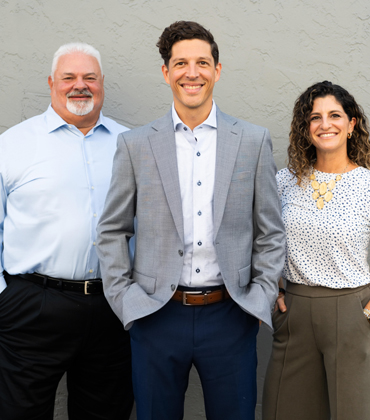 Victor Rancel, SVP of Sales and Ryan Burnett, President and Chelsea Burnett, SVP of Operations
When food brands begin to scale, their success often shifts away from the factory floor and into the broader retail ecosystem. Manufacturers must balance retailer expectations, distributor relationships, promotional strategies, and store-level execution, all of which vary by retailer. Understanding those realities often determines whether a promising brand reaches its next stage of growth. For many manufacturers, bridging that gap requires a partner with firsthand knowledge of how retailers and distributors operate.
Seidman Food Brokerage has spent more than three decades helping brands navigate those retail complexities across the Southeast. Founded by Gary Seidman in 1994, the company began by representing a small portfolio of overlooked brands. Over time, close retailer relationships, a strong store-level presence, and a commitment to serving manufacturers of all sizes have remained central to its approach. What started as a small operation has grown alongside its clients into an expanding team of more than 30 professionals supporting over $500 million in annual grocery sales.
Four years ago, Ryan and Chelsea Burnett acquired Seidman Food Brokerage from Gary and Cathy Seidman after more than a decade of learning every aspect of the business. Beginning with overnight resets before advancing through sales support, finance, and Publix account management, Ryan developed a firsthand understanding of what it takes to bring products successfully to market. Today, Ryan, Victor Rancel (SVP of Sales), Chelsea (SVP of Operations), and the company’s experienced executive team continue to build on the relationship-driven culture established by Gary while expanding the firm’s capabilities for the future.
That experience allows Seidman Food Brokerage to serve as an extension of its clients' executive teams throughout the Southeast. The company provides strategic guidance across retailer relationships, distributor management, promotional planning, trade investment, and in-store execution, helping manufacturers make better decisions and drive sustainable growth.
“This recognition belongs to our team, with great people supported by the right culture and systems to deliver great results for our clients,” says Ryan Burnett, president. “That has been the foundation of our success for more than 30 years.”
Seidman Food Brokerage's strength is rooted in its people and the culture that empowers them. Experienced account executives including Tom Loos, Travis Kacsan, Sue Strauss, Steve Biase, Danielle Roye, and Director of Sales Stan Rodriguez bring decades of retailer and category expertise across Publix, Lowe's Foods, Harris Teeter, Ingles, the company's longstanding kosher business, and other key accounts. An eight-person field sales team executes those strategies throughout the Southeast, spending significant time in stores identifying sales opportunities, ensuring promotional execution, and protecting shelf space.
In addition to Publix, the retail sales team works with independent grocers and natural food stores supplied through KeHE and UNFI. Chicago-based Senior Director Pearl Martinez leads Seidman Food Brokerage's national relationship with KeHE headquarters. The merchandising team oversees Publix-specific resets and in-store execution. Beyond Publix, the company supports brands across retailers including Winn-Dixie, Harris Teeter, Lowe's Foods, and The Fresh Market.
-
This recognition belongs to our team, with great people supported by the right culture and systems to deliver great results for our clients. That has been the foundation of our success for more than 30 years.
Relationships with manufacturers ranging from national billion-dollar brands to family-owned emerging success stories reflect Seidman Food Brokerage's belief that every brand deserves a strategy tailored to its unique opportunities and challenges. That client-first philosophy is reinforced by a culture built on respect, transparency, responsiveness, and treating every manufacturer as an important partner regardless of size.
As consumer preferences and retail strategies evolve, the company continues investing in data analytics, geographic expansion, and employee development. These efforts provide its team with better tools to serve clients while preserving the people-first culture and hands-on execution that have established Seidman Food Brokerage as a Top Specialty and Natural Food Broker. Looking ahead, it remains committed to being the trusted partner that helps turn opportunity into lasting success.
Retail Discipline for Specialty Food Growth
Shelf space in specialty and natural food has become harder to win because the gatekeepers no longer look at novelty alone. A brand may have clean ingredients, sharp packaging, pricing discipline and a credible consumer story, yet still lose momentum when distributor rules or retailer economics are misunderstood. The broker decision now sits closer to revenue protection than simple representation. Poor purchase order review can erode margin before a product reaches the shelf. Weak store follow-through can turn an authorized item into a phantom listing. A promotion that looks sensible on paper can teach the retailer the wrong sales lesson if it is not tied to the right store base.
Retailer fluency matters because food retail is not one market wearing different banners. Publix does not behave like Whole Foods. A natural independent does not create the same opportunity as a high-low supermarket. Distributors add another layer of timing, paperwork, item setup and slotting discipline. Strong brokers understand the economic logic behind each account, then translate it into practical field action. In practice, they know where a deep promotion can reset velocity, where a slower build is wiser and where a brand is paying for activity that will not change buyer behavior.
Execution is still physical, even when the planning is data-led. Specialty brands often underestimate the labor behind shelf protection, new item placement, reset support and promotional checks. The issue is not merely whether a broker has retail relationships. It is whether it has enough people near the stores to see voids, protect items at risk and confirm that a retailer’s plan has become visible to shoppers. Headquarters access without field discipline leaves too much to chance. Field coverage without account judgment can create motion without leverage.
Compliance pressure also gives brokers a narrower but important role. Manufacturers own formulation and food safety, yet retailer screens have become more exacting around traceability records, ingredient screens, labeling details and documentation. A capable broker does not pretend to be a product development firm. It helps brands understand which retailer requirements must be satisfied before presentation, where distributor paperwork can delay movement and when a product is unlikely to fit a specific account’s rules. The boundary is useful. It keeps sales work honest and prevents brands from mistaking enthusiasm for readiness.
Data has sharpened the buying decision. Legacy relationships still count, especially in regional grocery, but executives should ask whether the broker can connect sales signals to account planning. Scanner movement, warehouse data, void reports and store-level observations need to inform promotion timing and distribution priorities. Without that connection, brands risk repeating the same trade plans and hoping for different shelf results.
Seidman Food Brokerage is a premier choice for specialty and natural food manufacturers that need hands-on Southeast grocery support. It works across Publix, Whole Foods, Winn-Dixie, Harris Teeter, Lowe’s Foods, The Fresh Market and independent natural stores supported by KeHE and UNFI. Its model combines account executives and a dedicated retail sales force, with separate Publix reset support for store-level work. New item placement, retail merchandising, distributor coordination and sales analytics align closely with the pressures described above. For brands that view the Southeast as a serious growth market, Seidman Food Brokerage offers the practical fit.
...Read more
Insights
Turning Authorization into Retail Performance
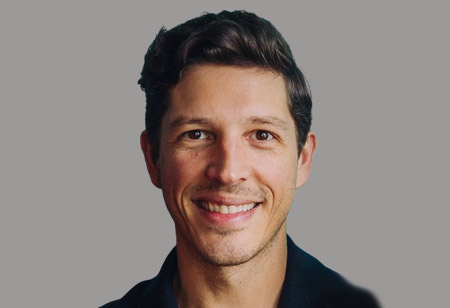
Ryan Burnett, President A great product creates opportunity. Thoughtful strategy and precise execution turn that opportunity into growth.
Company :
Seidman Food Brokerage
Management Victor Rancel, SVP of Sales and Ryan Burnett, President and Chelsea Burnett, SVP of Operations
Description
Seidman Food Brokerage supports food manufacturers by connecting specialty, natural, and grocery products with distributors, retailers, and consumers across the Southeast. The company focuses on sales growth, market expansion, retail support, merchandising, and building strong relationships throughout the food supply chain through experienced teams and strategic industry expertise.