
Thank you for Subscribing to Food Business Review Weekly Brief


A new food or beverage product often starts with a specific ingredient requirement: a particular texture, flavor, format, or performance characteristic that can help bring a concept to market. Turning that requirement into a commercially viable ingredient, however, requires more than product development. The solution has to work in the finished application, meet defined specifications, and be produced consistently at scale.
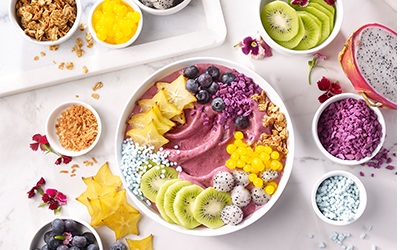 Pecan Deluxe Candy Company has built its capabilities around that process. The company works with customers to create customized ingredients, bringing together market insight, R&D, culinary expertise, application testing, and manufacturing to move an idea from concept toward commercial production.
Its expansion into popping boba provides one example. As interest in boba and refresher-style beverages grew among its quick-service restaurant customers, Pecan Deluxe brought popping boba into fully commercial U.S. production, creating a domestic supply option rather than relying entirely on product shipped from overseas. For the company, the opportunity reflects a broader approach: understand where customers are heading, determine what they need, and develop the capability to deliver it.
“The most common reasons our customer partners choose us: quality, customization, ideation, and speed of service,” says Jay Brigham, president and CEO. “You have to be quick. You have to be able to respond quickly.”
 Requirement to Application
That responsiveness begins with understanding what the customer is trying to achieve. Pecan Deluxe’s marketing team can work with insight providers to identify emerging opportunities, while customers may arrive with their own marketing concepts and a clear direction for a product. From there, the company’s R&D and culinary teams work with the customer to determine what the ingredient needs to deliver in its intended application.
Before development moves forward, potential projects pass through a qualification process that considers expected volumes, quality requirements, minimum order quantities, and other commercial parameters. Once a project proceeds, Pecan Deluxe can develop samples for customers to test in their finished applications. Feedback from that testing helps the teams refine the ingredient and establish specifications around the agreed requirements.
Application testing is important because an ingredient can behave differently once it becomes part of a larger formulation. A product intended for a frozen dessert may have different requirements from one designed for a beverage or baked application. Pecan Deluxe’s culinary and R&D teams work through those variables with customers so the ingredient is evaluated in the environment where it will ultimately be used.
That experience extends beyond the company’s original focus. Pecan Deluxe began primarily around dairy and ice cream, but its products now extend across quick-service restaurants, consumer packaged goods, snacks, yogurt, baked products, beverages, and other applications. Working across those categories requires an understanding of how ingredients perform in different environments, whether the finished product is frozen, wet, or baked.
The most common reasons our customer partners choose us: quality, customization, ideation, and speed of service. You have to be quick. You have to be able to respond quickly.
Making Customization Consistent
Once an ingredient has been developed and approved, the next step is reproducing the agreed product consistently.
Pecan Deluxe manages that transition through product standards, process controls, and documented standard operating methods. Procedures are regularly updated, while continuous-improvement practices and technology are used where appropriate to promote uniformity. Specifications established during development provide the reference point for production.
This discipline is particularly important when ingredients are customized for different customers and applications. Requirements can vary between a baked inclusion, a frozen dessert ingredient, and a beverage component, but the production expectation remains the same: deliver the product according to the specifications agreed with the customer.
 Quality is a central part of that responsibility. Pecan Deluxe maintains customer and third-party audit processes across its facilities and certifications, including SQF, Halal, and Kosher. Customers can also visit and audit the facilities. Plant hygiene controls, documented processes, and other quality measures support the company’s focus on product safety and consistency.
For the company, that responsibility is directly connected to the supplier’s role in the customer’s finished product.
“Our focus is not to build a consumer facing brand. We’re here to elevate our customers offerings, hence the tagline, ‘Let us be your secret ingredient’,” says Tara Gonzales, director of marketing.
That perspective keeps the emphasis on the customer’s product rather than the ingredient in isolation. The objective is to provide a customized solution that meets the customer’s requirements and performs as intended in the finished application.
Following the Customer Opportunity
The same customer-driven thinking influences how Pecan Deluxe develops new capabilities. The company sources ingredients globally and operates facilities in the U.S., England, and Thailand, allowing it to draw on its manufacturing network according to production and shipping requirements while supporting customers across markets.
Popping boba illustrates how a customer need can lead to a new manufacturing capability. As QSR customers showed growing interest in boba and refresher-style beverages, Pecan Deluxe brought the ingredient into commercial U.S. production, giving customers a domestic supply option alongside overseas sourcing.
The significance of the move goes beyond the ingredient itself. It shows how Pecan Deluxe watches for opportunities where customer demand and manufacturing capability intersect. An emerging requirement can become a reason to develop new expertise, invest in production, and create another way for customers to bring an idea to market.
That willingness to follow the opportunity has helped the company evolve from its roots in dairy and ice cream into a broader range of food and beverage applications. Rather than separating innovation from manufacturing, Pecan Deluxe has built its model around connecting the two.
Measuring Success through the Customer
That evolution ultimately comes back to how Pecan Deluxe defines success.
“I don’t really look at us as successful if our customers aren’t successful,” says Brigham.
 The statement captures a philosophy that extends beyond supplying an ingredient. Pecan Deluxe’s value is tied to what happens after the product leaves its facilities: whether the ingredient performs as intended, fits the customer’s requirements, and contributes to a finished product the customer can take to market.
The perspective also explains the company’s emphasis on quality, customization, ideation, and speed. These are not separate selling points. They are the capabilities required to respond when a customer has a new idea, a changing requirement, or an opportunity that needs to move quickly.
Over 75 years, that customer focus has given Pecan Deluxe the foundation to keep adapting as the needs of its customers change. Continued investment in R&D, culinary expertise, quality, and manufacturing strengthens that foundation, allowing the company to support customers as ideas move from early concepts into commercial products.
For Pecan Deluxe, the ingredient is only part of the job. The real measure is what that ingredient enables the customer to accomplish. This customer-focused approach has earned Pecan Deluxe Candy Company recognition as Food Products and Topping Suppliers of the Year 2026, reflecting its ability to combine customized development with the quality, responsiveness, and production capabilities needed to support customers at scale.
Where Custom Food Inclusions Meet Commercial Scale
A new beverage or frozen-dessert concept can lose its commercial window while an ingredient supplier is still working through samples. That pressure has intensified as QSR and CPG teams use texture to create consumer interest beyond flavor. Popping inclusions and crunchy components can make a familiar format feel new, but novelty has a short shelf life. Procurement and R&D teams therefore have to judge suppliers on more than creative range. The harder question is whether an idea can move quickly from bench work into a formulation that survives production conditions.
Speed matters most when paired with disciplined customization. A supplier that turns a brief into samples quickly gives customers more room to test an idea before launch windows close. Fast sampling has limited value if the ingredient cannot be adjusted for the finished application. Frozen systems and baked goods expose ingredients to different moisture or temperature conditions. Development teams should understand those differences and translate a sensory target into usable specifications. Collaboration between supplier R&D and the customer’s technical team matters when a custom inclusion must fit an established process rather than force the plant to accommodate it.
Consistency becomes the next filter once the concept works. Custom toppings can vary in size or texture, and small deviations may become visible across thousands of finished units. Buyers need evidence that repeatability is built into documented procedures rather than individual operators. Process controls and updated procedures can support that discipline. Production technology can add another layer where uniformity matters. Specifications should also be agreed before scale-up, including acceptable ranges for the particular sauce or inclusion. Clear parameters reduce ambiguity at handoff as volumes rise.
Food safety and supply continuity sit behind the same decision. Large brands cannot treat audits or sourcing as afterthoughts once a program launches. Third-party certification and customer audits provide an external check on plant discipline. Sourcing reach can help when availability shifts by region. Multi-site manufacturing can add flexibility, but only if standards remain consistent across facilities. Executives should press for clarity on specification control when work moves between locations.
“Pecan Deluxe uses a gatekeeping process to assess feasibility before production, with approved work anchored to agreed specifications.”
Commercial fit also depends on the supplier’s willingness to screen opportunities before development resources are committed. Minimum order quantities and expected volume can determine whether a concept is viable long before launch. A structured gatekeeping process brings those constraints forward rather than letting them surface after repeated sampling. For buyers, that discipline protects development time and creates a cleaner path from approval to production. The strongest supplier relationships do not promise every idea. They move credible ideas quickly while defining production boundaries early enough to protect the sensory intent at scale.
Against these buying criteria, Pecan Deluxe Candy Company presents a combination of capabilities relevant to food brands seeking custom inclusions at commercial scale. Its model pairs R&D collaboration with sample development and application testing, while documented process controls support consistent production. A qualification process helps assess feasibility before production, with approved work anchored to agreed specifications. Its international manufacturing footprint provides additional flexibility across sourcing and production requirements, while SQF certification and customer auditing practices reinforce its focus on quality and accountability. The company also manufactures popping boba in the United States, giving beverage programs a domestic supply option for a growing application. For buyers balancing product development with production control, that combination makes Pecan Deluxe a supplier worth considering.
...Read more
Food Product and Topping Suppliers Info
Q1
What Do Food Products and Topping Suppliers Provide?
Food Products and Topping Suppliers develop ingredients and food components designed to meet specific flavor, texture, format and application requirements. Their work can include customized inclusions, toppings, confectionery components and other ingredients used in frozen desserts, bakery products, beverages, snacks and foodservice. Effective development considers how an ingredient performs in the finished formulation, not only how it looks or tastes on its own. For Food Products and Topping Suppliers, that application-based view can help align ingredient development with practical production needs.
Q2
How Does Pecan Deluxe Candy Company Approach Customized Ingredients?
Pecan Deluxe Candy Company combines R&D, culinary development, application testing and manufacturing to move customized ingredient ideas toward commercial production. Its teams develop samples that customers can test in finished applications, then use feedback to refine specifications. The company also applies this process across dairy, ice cream, quick-service restaurant, consumer packaged goods, snack, yogurt, baked and beverage applications. This integrated approach allows Food Products and Topping Suppliers to address requirements before production begins.
Q3
What Should Buyers Evaluate When Choosing Food Products and Topping Suppliers?
Evaluation should begin with the intended application, required specifications, expected volume and minimum order requirements. Quality controls, sampling processes and the ability to reproduce an approved ingredient consistently also matter. Suppliers in this category need production systems that can translate development specifications into repeatable output. Customers may also consider audit practices, certifications and facility controls when product safety and consistency are important to the finished product.
Q4
How Can Food Products and Topping Suppliers Support New Product Development?
The category can support product development by helping teams turn an idea into an ingredient that works in a real formulation. Application testing is particularly useful because an ingredient may behave differently in a frozen dessert, beverage or baked product. Suppliers in this category can therefore contribute beyond basic ingredient production by helping establish performance requirements, refine samples and prepare an approved product for scaled manufacturing.
Q5
How Does Pecan Deluxe Candy Company Extend Its Manufacturing Capabilities?
Pecan Deluxe Candy Company has expanded beyond its roots in dairy and ice cream into a wider range of food and beverage applications. One documented example is its move into commercial U.S. production of popping boba, creating a domestic supply option as demand grew among quick-service restaurant customers. Its operations across the U.S., England and Thailand also support production and shipping requirements across markets. These capabilities show how Food Products and Topping Suppliers can adapt manufacturing resources to emerging customer requirements.
Q6
Why Does Consistency Matter for Suppliers in This Category?
Consistency connects product development with commercial production. Once an ingredient is approved, documented specifications, process controls and standard operating methods help maintain the agreed characteristics from batch to batch. Pecan Deluxe uses product standards, documented procedures, continuous-improvement practices and customer and third-party audit processes, with certifications including SQF, Halal and Kosher. For Food Products and Topping Suppliers, these controls help ensure customized ingredients perform according to defined requirements as production scales.
Company :
Pecan Deluxe Candy Company
Management Jay Brigham, President and CEO and Tara Gonzales, Director of Marketing
Description
Pecan Deluxe Candy Company is a family-owned food ingredient manufacturer founded in 1950, developing customized inclusions, toppings, confectionery, baked products, and other food components for global customers. With operations across the US, UK, and Thailand, the company combines culinary development, R&D, manufacturing, and customer collaboration to create products across dairy, bakery, beverages, confectionery, snacks, and foodservice.