

Thank you for Subscribing to Food Business Review Weekly Brief
Packaged Food and Beverage Manufacturers Driving Innovation across APAC
Food Business Review | Tuesday, September 22, 2026
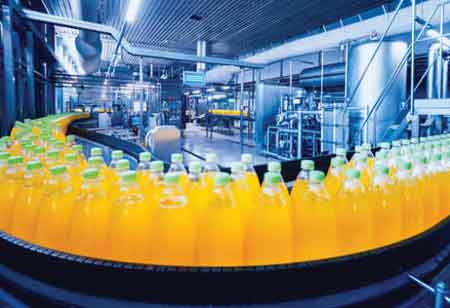
Packaged food and beverage manufacturers address consumer needs by providing the market with an extended variety of products. Manufacturers produce numerous products and items, ranging from staples to exotic delicacies. However, since customer preferences are constantly evolving, food manufacturers must adapt to the changes and invest in product development and quality. The manufacturers’ interest in product innovation, coupled with the need for high quality, is defined by evolving consumer trends and the need for efficiency in food production across APAC.
Meeting Consumer Demand through Product Innovation And Quality
Food producers must invest in the development and production of goods with diverse flavors and ingredients in order to accommodate the different tastes and dietary preferences of consumers. The development and production of high-quality food products result in competitive advantages for the producers.
Stay ahead of the industry with exclusive feature stories on the top companies, expert insights and the latest news delivered straight to your inbox. Subscribe today.
In order to satisfy the needs of their clients and make them happy, manufacturers need to have quality control of their manufacturing process at each stage. The product should undergo many laboratory tests and tastings before it comes to the market, and its quality and taste comply with the requirements.
Additionally, the manufacturing process should be controlled in order to achieve high-quality products. This can be done by having quality control measures implemented. It allows maintaining customers' loyalty and their confidence in the product. Due to the increasing demand for novel food products in APAC, more emphasis is placed on quality and product differentiation by manufacturers.
Enhancing Production Efficiency through Advanced Manufacturing Technologies
Modern food manufacturers invest in new technologies in order to increase production efficiency and accommodate the rising demand for more diverse products. Manufacturers must ensure that the production process remains consistent and controlled despite high production volumes and the complexity of working with various ingredients.
Robotic technologies can take over manufacturing processes. Robots can be programmed to consistently carry out the same tasks, enabling manufacturers to ensure the highest product quality while eliminating human errors. AI and robotics are ideal for meeting the growing demand for more diverse products because they enable companies to create products, monitor production, and make necessary adjustments in real time.
Modern data processing and analytics can be employed to ensure proper utilization and maintenance of production equipment. Instead of conducting regular equipment maintenance, manufacturers can employ predictive maintenance models. The utilization of robotics and artificial intelligence helps manufacturers collect and process relevant data in real time to detect potential equipment issues. Robotic installations and smart devices can help manufacturers reduce waste and maintain all aspects of production, including the supply chain.
Advanced technologies and software can be employed to ensure an effective quality control process that supports the production of high-quality goods. Modern food manufacturers must recognize the role of such technologies in sustaining their operations and competitive advantages in the dynamic market environment.
Supporting Sustainable Growth through Responsible Manufacturing Practices
Environmental concerns are encouraging manufacturers to reevaluate current practices and invest in new initiatives that support eco-friendly and sustainable production while maintaining product quality and reducing unnecessary expenditures. The manufacturers should make sure that their activities are within the environmental constraints and take care of people, planet, and profit.
The significance of energy conservation and the reduction of waste should be considered by companies. The use of efficient energy technology and machinery will help reduce the amount of energy used and limit environmental damage. New ways to conserve energy and cut down on greenhouse emissions should be considered by manufacturers for a safer working environment. The use of green practices allows manufacturers to lower costs and continue the flow of production without any disruptions.
Sustainable water management is also at the forefront of modern manufacturers’ initiatives. Producers must find new ways to reduce water consumption and minimize the ecological footprint of manufacturing processes. For example, the utilization of water-saving technologies and innovative approaches to water management can help manufacturers reduce water usage while maintaining hygiene, safety, and product quality.
Besides, many companies are also motivated to decrease the environmental footprint of manufacturing by reducing the creation of waste and ensuring that the waste is properly disposed of. The producers use intelligent technology and improve the process of manufacturing to reduce the amount of waste created. In addition, recycling, reuse, and repurposing of products help companies in achieving the goal of a closed-loop supply chain.
Manufacturers must invest in innovative and sustainable packaging solutions to reduce carbon footprints and lower manufacturing costs. Sustainability initiatives are becoming increasingly important across APAC, where consumers and regulators are placing greater emphasis on responsible manufacturing and environmentally conscious business practices.
More in News
Food irradiation has transformed from a novel technology into a specialized and essential component of global food safety and supply chain infrastructure. The underlying science is well-established; however, the innovation frontier now focuses on the customized application and delivery of irradiation services, which are carefully designed to meet the unique biological, logistical, and commercial needs of different food sectors. This expansion is driven by global trade, the growing demand for safer food with cleaner labels, and the need to reduce food waste. Consequently, distinct service models have developed for fresh produce, meat and poultry, and spices, each demonstrating a thorough understanding of the product's journey from farm to fork.
The Nexus of Logistics and Speed in Tailored Service Models
The inherent perishability of fresh produce dictates the service model. Innovation here is less about the irradiation chamber itself and more about its strategic placement and integration into the cold chain. The dominant model is the port-proximate, rapid-turnaround facility. These advanced irradiation centers are often co-located with major seaports, airports, and large-scale distribution hubs.
Refrigerated containers of produce, such as Vietnamese dragon fruit or Mexican guavas, arrive at the port and are swiftly transferred to the adjacent irradiation facility, often without breaking the cold chain. The pallets are processed through an automated conveyor system, where precise dosimetry ensures that every piece of fruit receives the minimum required dose for phytosanitary efficacy without exceeding the maximum dose tolerated by the fruit. This dose mapping is a critical service element, guaranteeing treatment uniformity. Within hours, the treated container is certified and released for its onward journey to retail distribution centers. This integrated service model, which often bundles irradiation with cold storage, quality inspection, and logistics management, minimizes handling and delays, preserving the product's quality and value in a fast-paced global marketplace.
Meat and Poultry: The Pinnacle of Pathogen Reduction
In the meat and poultry industry, the primary and overwhelming driver for irradiation is the enhancement of microbiological safety. It serves as a terminal, non-thermal pasteurization step, a critical kill step that is exceptionally effective against a broad spectrum of dangerous foodborne pathogens. Bacteria such as Salmonella, E. coli O157:H7, Listeria monocytogenes, and Campylobacter are significant public health concerns, and raw meat, particularly ground products where surface contaminants can be distributed throughout, is a primary vector.
Irradiation inactivates these pathogens by disrupting their DNA, rendering them incapable of replication. The key advantage is that it achieves this without using heat, thereby preserving the fresh, raw characteristics of the meat—its color, texture, and flavor. This makes it an ideal safety intervention for products sold raw to consumers, such as ground beef patties, chicken fillets, and pork chops. It can be applied to both fresh and frozen products with equal efficacy, providing a final safeguard in a multi-hurdle food safety system.
The service models in the meat sector are designed to accommodate high production volumes while ensuring stringent process control to eliminate the risk of post-treatment recontamination. Two sophisticated approaches have emerged as industry standards. The first is Large-Scale Centralized Processing, which leverages economies of scale by situating high-capacity third-party facilities in regions with a dense concentration of meat and poultry processing plants. These centers are typically equipped with gamma irradiators that can process entire pallets of packaged meat products simultaneously. Producers ship case-packed, finished goods via refrigerated transport to the irradiation center, after which the treated products are either returned to the producer or distributed directly to retailers. This model enables processors of all sizes to benefit from irradiation without the substantial capital investment of installing in-house systems. The second model, In-Plant Integrated Systems, involves incorporating irradiation technology directly into the production line. Using machine-based systems such as electron beams (e-beams) or X-rays—powered by electricity and capable of instantaneous operation—these units are strategically placed immediately after final packaging and before shipping case assembly. This “in-the-box” treatment ensures maximum protection against recontamination while granting processors complete control over product safety protocols from start to finish.
Spices, Herbs, and Seasonings: The Gold Standard for Purity
The global spice trade involves sourcing raw materials from diverse agricultural environments, where harvesting and drying practices can introduce significant microbial loads, including bacteria, yeasts, and molds. For decades, the industry relied on chemical fumigants to decontaminate these ingredients. However, due to regulatory pressures and consumer demand for cleaner ingredients, irradiation has emerged as the premier technology for ensuring the microbial purity of spices, herbs, and seasonings.
The process is uniquely suited for these products. It effectively penetrates all forms of packaging, from bulk sacks to small retail jars, ensuring thorough decontamination. Crucially, as a cold process, it does not use heat, which preserves the delicate volatile oils and compounds that determine a spice's characteristic flavor, aroma, and color. Applying a dose up to 10 kGy or even higher, irradiation can achieve a level of microbial reduction that is vital not only for direct consumer safety but also for the industrial food manufacturers who use spices as ingredients. A contaminated spice blend can compromise the safety and shelf stability of an entire production batch of a sauce, soup, or ready-to-eat meal.
The service provider’s expertise lies in its ability to deliver a precise, validated dose to every part of the batch, ensuring efficacy without any adverse impact on sensory quality. Following treatment, the facility provides a Certificate of Processing. This document is a critical piece of the supply chain's quality assurance framework. It serves as a guarantee to downstream customers that the ingredient has been treated to specification, and it is an essential part of the traceability and food safety documentation required by regulators and major food producers. These irradiation services are highly flexible, capable of handling everything from multi-ton shipments of black pepper to small, high-value batches of exotic herbs, providing a vital guarantee of purity for the entire food industry.
The progression of food irradiation demonstrates profound integration and astute application. The industry has effectively transitioned from validating the technology's efficacy to showcasing its indispensable capacity as a versatile solution for the supply chain. The specialized service models developed for fresh produce, meat, and spices corroborate this market-driven advancement. Future innovation will likely concentrate on harnessing data and automation to augment the precision and efficiency of these bespoke services. As consumer demand for secure, premium-quality, and internationally sourced food continues to rise, irradiation is poised to play a strategic role in contemporary commerce and become a foundational element of global food security.
...Read more
Throughput losses in shrimp plants rarely begin with one dramatic machine failure. More often, grading drifts from target sizes, product queues build before freezing, cleaning routines consume more production time than planned and maintenance interruptions unsettle the schedule. Equipment selection therefore affects yield control and labor deployment while shaping the plant’s ability to respond when export demand shifts toward different presentations.
Precision at production speed is the central test. A grader may process a large volume, but inconsistent separation pushes corrective work downstream and can leave freezing capacity underused. Buyers should examine repeatability across changing shrimp sizes, adjustment time between runs, calibration stability and whether supervisors can reproduce settings without relying on one experienced operator. Speed matters only when classification remains stable enough to protect pack specifications and avoid rework.
“Balzo Machines adjusts conveyor layouts to available space and develops equipment through 2D and 3D design review before production.”
Plant fit deserves equal scrutiny because processors seldom have the option to rebuild around new equipment. Conveyor direction, discharge points, worker access and cleaning clearance must match the existing floor plan. A standard machine that performs well in isolation can still create bottlenecks when it conflicts with peeling stations or packing areas. Design review should cover actual dimensions and line capacity before fabrication. Clear drawings also allow production managers to test movement around the proposed line and catch conflicts before steel is cut.
Capacity should be assessed across connected stages rather than at the nameplate level of one machine. Extra grading output has limited value when the freezing section cannot accept it, while excess freezer capacity becomes expensive idle infrastructure when upstream flow falls short. A credible supplier should understand these dependencies and size equipment against the plant’s product mix, shift pattern, available labor and sanitation schedule. That discipline matters as processors move from bulk formats toward more prepared products.
Maintenance economics are often obscured by the purchase price. Frequent stoppages increase labor cost and can disrupt the balance between grading and freezing. Procurement teams need realistic service intervals, parts documentation, remote support terms and clarity on which components can be sourced locally. Machine construction should also permit direct access for cleaning without leaving difficult areas where residue can accumulate. Sanitation and worker protection belong in the equipment review rather than being treated as later modifications.
"Precision at production speed is the central test."
Controls should serve the process rather than add complexity. Variable speed drives, sensors, stored recipes and touchscreen interfaces can reduce setup variation when applied to tasks that operators repeat. Their value lies in shortening calibration and making proven settings easier to recover. Buyers should be cautious of technology that raises cost without improving a measurable production step. Installation support must cover operation and sanitation, backed by manuals detailed enough for maintenance staff to diagnose common faults.
Balzo Machines is the premier choice for processors that need machinery adapted to plant constraints without sacrificing grading accuracy. Its portfolio includes shrimp sorting equipment, beheading lines, continuous immersion cookers and washing systems. The company adjusts conveyor layouts to available space and develops equipment through 2D and 3D design review before production. Its graders can use touchscreen controls and saved recipes to automate roller calibration. Balzo Machines also provides installation, operator instruction, maintenance guidance and cleaning training. For buyers balancing output and sanitation against service burden, this combination offers a practical basis for selection.
...Read more
High-quality fried chicken products continue to gain popularity among consumers seeking flavorful, convenient, and satisfying meal options. From quick-service restaurants and foodservice providers to retail food manufacturers and ready-to-cook product suppliers, the demand for premium fried chicken offerings is driving innovation throughout the food industry. Consumers increasingly expect products that deliver exceptional taste, consistent texture, quality ingredients, and convenient preparation without compromising on freshness or dining experience.
The fried chicken market has evolved significantly over the years. What was once considered a simple comfort food has become a highly competitive category where product quality, preparation methods, ingredient selection, and customer experience play crucial roles in purchasing decisions. Food producers are investing in improved recipes, advanced processing techniques, and quality assurance programs to meet growing expectations.
Changing lifestyles have contributed to increased demand. Busy consumers often seek meal solutions that combine convenience with restaurant-quality flavor. High-quality fried chicken products are finding strong demand across retail, foodservice, catering, and delivery channels. As consumer preferences continue evolving, premium fried chicken products are becoming an important segment within the broader prepared food industry.
Premium Ingredients and Product Innovation
The defining characteristics of high-quality fried chicken products are careful ingredient selection. Consumers are paying closer attention to food quality, encouraging producers to focus on better sourcing practices, seasoning blends, and preparation standards. Flavor remains one of the most important purchasing factors. Product developers continually refine marinades, coatings, and seasoning profiles to create distinctive taste experiences that appeal to a broad range of customers. Regional flavors, spicy varieties, and gourmet-inspired offerings are becoming increasingly popular within the market.
Consumers expect fried chicken products to deliver a satisfying balance between crispy coatings and tender meat. Achieving this consistency requires precise production methods and strong quality control processes throughout manufacturing and preparation. Product variety is expanding as well. Food manufacturers and foodservice providers are introducing different cuts, portion sizes, boneless options, and ready-to-cook formats to accommodate diverse consumer preferences and dining occasions.
Ready-to-eat, heat-and-serve, and frozen fried chicken products allow consumers to enjoy restaurant-style meals with minimal preparation time. These formats are particularly appealing to busy households and foodservice operators seeking efficiency. Consistent flavor, appearance, and preparation standards help build customer trust and encourage repeat purchases. The combination of premium ingredients, culinary innovation, and reliable quality is helping producers differentiate their products in an increasingly competitive marketplace.
Ensuring Food Safety and Enhancing Operational Performance
Food manufacturers are investing heavily in production technologies that improve efficiency while maintaining product quality. Advanced processing systems help ensure consistency across large production volumes without sacrificing flavor or texture. Producers implement rigorous quality management procedures to maintain product integrity, support regulatory compliance, and protect consumer confidence. Automation is playing a growing role in food production environments.
Modern equipment helps standardize preparation processes, improve operational efficiency, and reduce variability between batches. Effective packaging helps preserve freshness, improve convenience, and support distribution across retail and foodservice channels. Consumers increasingly expect packaging that maintains product quality while offering ease of use. Reliable sourcing, efficient transportation, and proper storage conditions help ensure products reach customers in optimal condition. Sustainability considerations are also influencing production strategies.
For food manufacturers, retailers, and foodservice providers, premium fried chicken products have evolved beyond just convenience. They embody a blend of culinary excellence, operational efficiency, and innovative approaches centered around consumer preferences. The combination is crucial for achieving sustained success in the market. The focus has shifted towards delivering high-quality offerings that satisfy taste and enhance operational capabilities, guaranteeing that industries can satisfy the growing needs of customers while standing out in a competitive landscape.
Market Growth and the Future of Premium Fried Chicken Products
Consumer preferences continue shaping the future of fried chicken products. Many customers are seeking higher-quality meal options that combine convenience with premium dining experiences. This trend is encouraging food producers to focus on product differentiation and value-added offerings. Consumers appreciate products that align with their taste preferences, portion requirements, and meal occasions. Manufacturers are expanding product portfolios to address diverse market segments.
Fried chicken products that maintain quality during transportation are becoming especially valuable for restaurants and foodservice operators. Retail demand remains strong as consumers increasingly purchase prepared and ready-to-cook products for home consumption. Premium frozen and refrigerated offerings provide convenient alternatives to traditional meal preparation while delivering restaurant-inspired flavors.
Health-conscious consumers are influencing innovation within the category. Producers are exploring preparation methods, ingredient improvements, and product variations that align with evolving dietary preferences while preserving flavor and quality. Technology will continue supporting future advancements through improved production methods, enhanced quality monitoring, and more efficient distribution systems.
The innovations will help manufacturers meet growing demand while maintaining high standards. High-quality fried chicken products will continue evolving toward more diverse, convenient, and premium offerings. The focus will remain on delivering exceptional flavor, consistent quality, and satisfying consumer experiences across multiple dining channels.
...Read more
Food is no longer defined only by what happens inside the kitchen or processing plant. The quality of the final product depends on a chain that begins with raw material selection and extends through processing, preservation, packaging, transportation and storage. That chain is becoming more sophisticated as consumers expect convenience without compromising freshness, safety or nutritional value.
India illustrates the scale of this transition. The food processing sector contributes about 7.9 percent of manufacturing GVA and around 8 percent of agriculture GVA, while processed food represents an important share of exports. Industry estimates also place the Indian food processing market at more than USD 380 billion in FY2025, with substantial expansion expected over the coming decade.
Processing Moves Closer to the Source
One of the industry’s persistent challenges has been the distance between agricultural production and organized processing. Fruits, vegetables, dairy, grains, meat and marine products can lose value quickly when handling, storage and transportation are poorly coordinated.
Processing changes that equation. Freezing, drying, milling, pasteurization, thermal treatment, fermentation and other methods allow producers to extend shelf life while creating products with greater commercial value. The benefit is not limited to manufacturers. Better processing infrastructure can create additional markets for farmers and reduce dependence on selling commodities immediately after harvest.
“The competitive advantage increasingly lies in managing the complete journey from raw material to finished food with precision, safety and commercial discipline.”
Government programs are reinforcing this infrastructure. The Ministry of Food Processing Industries continues to support cold-chain development, preservation capacity, agro-processing clusters and micro food processing enterprises through programs including PMKSY and PMFME. Recent initiatives have also included support for food irradiation facilities and affordable credit for processing units.
Packaging Becomes Part of Product Quality
Packaging has traditionally been viewed as a protective layer and a marketing surface. Its role is considerably broader. A package has to protect food from moisture, oxygen, light, contamination and physical damage while remaining compatible with filling, sealing, transportation and storage conditions.
Regulation reflects this responsibility. FSSAI requirements specify that materials coming into contact with food must meet food-grade standards and that packaging should suit the product and the stresses encountered during handling and transportation. Packaging also needs to remain hygienic and tamper resistant.
This makes packaging decisions closely connected to product development. A sauce, frozen meal, dairy product and snack may require entirely different barrier properties and formats. Shelf-life targets, distribution temperature, filling technology and retail conditions all influence the final package.
The Sustainability Question Gets More Complicated
Packaging companies face a difficult balance between reducing material use and preserving food effectively. Lightweighting can reduce packaging consumption, yet removing too much material may compromise protection and increase product losses. A package that looks environmentally preferable is not necessarily better if it causes food to spoil before reaching the consumer.
Recycled materials, recyclable structures and more efficient package designs are therefore receiving greater attention. FSSAI maintains an approved list of manufacturers for food-contact rPET, showing how recycled packaging is entering regulated food applications.
The next stage will require manufacturers to evaluate packaging through its entire use cycle rather than focusing on material reduction alone. Recovery, recyclability, food safety, transport efficiency and product preservation all belong in the same conversation.
Automation Changes the Factory Floor
Modern food plants are also becoming more measurable. Automated filling, weighing, sorting, inspection, sealing and palletizing systems can improve consistency while reducing manual intervention. Sensors and connected production equipment provide manufacturers with better visibility into temperature, throughput, downtime and quality parameters.
Artificial intelligence has a narrower but growing role. Computer vision can support inspection for defects while predictive systems can help identify unusual equipment behavior or production patterns. The value comes from applying these tools to specific production problems rather than treating AI as an independent objective.
For packaging lines, automation can be particularly useful where speed and consistency determine commercial performance. High-volume operations require precise filling, reliable seals and accurate labeling because small variations can become expensive when repeated across thousands of units.
Compliance Moves Into Everyday Operations
Food safety cannot be separated from manufacturing discipline. Traceability, sanitation, ingredient control, testing, labeling and documentation increasingly form part of routine production management.
India’s regulatory environment continues to develop. FSSAI’s packaging and labeling framework has undergone amendments, including a further amendment to the Labelling and Display Regulations in March 2026. The authority has also issued draft packaging amendments covering additional definitions and food-contact considerations.
For manufacturers, regulatory compliance is therefore less about responding to inspections and more about building reliable processes that produce evidence every day. Records, testing procedures and supplier documentation become important assets when products move across regions or into export markets.
A More Integrated Food Manufacturing Model
Food processing and packaging are increasingly being planned as connected functions. Product formulation affects packaging requirements. Packaging affects shelf life and transportation. Processing capacity influences procurement decisions while cold-chain availability determines which products can reach distant markets.
That integration is particularly important for India’s ambitions in processed-food exports. The sector’s export performance, investment activity and expanding processing infrastructure indicate a shift toward greater value addition rather than simply moving agricultural commodities through the supply chain.
The strongest food businesses will be those that understand this connection. Efficient processing alone cannot compensate for weak packaging, just as attractive packaging cannot rescue inconsistent product quality. The competitive advantage increasingly lies in managing the complete journey from raw material to finished food with precision, safety and commercial discipline.
...Read more
