
Thank you for Subscribing to Food Business Review Weekly Brief

Handsome Brook Farms
Tracy Favre, SVP of Sustainability and Organic Strategies
Engineering a More Sustainable Supply Chain
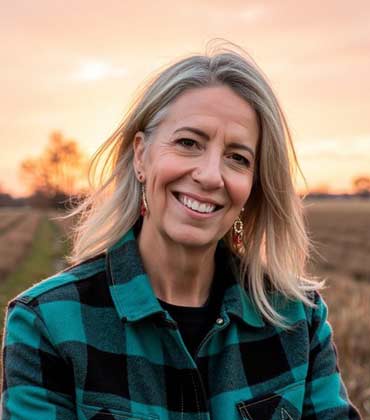
Tracy Favre
Tracy Favre is SVP of Sustainability and Organic Strategies at Handsome Brook Farms. Her experience spans environmental engineering, sustainable land management, organic inspection and certification, consulting and sustainability reporting.
Making Sustainability Work through Better Systems I began my career as an environmental engineer working in watershed management. After relocating to Germany, I pursued a master’s degree in sustainable development, emphasizing agriculture. The program introduced me to systems-based problem-solving, shaping my understanding of sustainability as a way to address interconnected challenges. After returning to the United States, I joined Holistic Management International, a nonprofit in Albuquerque, New Mexico, working with farmers and ranchers on sustainable land management. Over four years, I helped build consulting services for private landowners before becoming chief operating officer, responsible for programs, consulting contracts and the consulting department’s profit and loss. One client, Horizon Organic, encouraged me to consider a position on the National Organic Standards Board, a federal advisory board to the Secretary of Agriculture on the USDA National Organic Program. I served for five years as a natural resource management stakeholder representative, deepening my involvement in organic standards and programs in the United States and worldwide. From Organic Compliance to Sustainability Strategy During my final year on the board, I was recruited as global director at Quality Assurance International, then described as the country’s largest organic certifier of processed food products. I led a team of around 58 staff members responsible for certifying products to USDA National Organic Program standards. I later combined my experience as an inspector, certifier and consultant in independent consulting focused primarily on organic compliance. I eventually joined Handsome Brook Farms, an organic pasture-raised egg company working with 300-plussmall family farms across 14 states. Initially, I helped manage the impact of birds on pastureland and served as program manager for two USDA grants. In July of this year, my role expanded from VP of Sustainability to SVP of Sustainability and Organic Strategies. Pasture work moved under operations, while I retained responsibility for sustainability reporting for major corporate clients, including Sam’s Club, Walmart and Costco. My broader responsibilities include marketing and assessing where the organization should grow over the next 10 to 15 years, including supply-chain integration and new markets.Build the tools, build the system, build the process that allows you to do your job better and also keep your skills sharp and stay current with the way things are changing.
The articles from these contributors are based on their personal expertise and viewpoints, and do not necessarily reflect the opinions of their employers or affiliated organizations.
