
Thank you for Subscribing to Food Business Review Weekly Brief

INW – Dallas One Solutions
Jason Ayling, GSP | Senior Manager, Environmental, Health & Safety
Building a Strong EHS Culture through Leadership
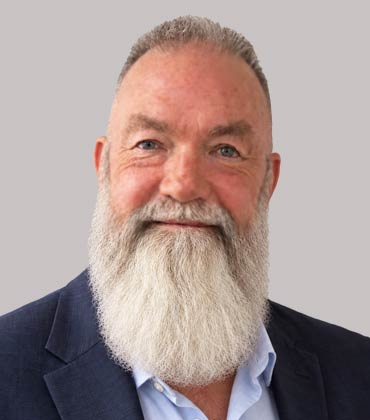
Jason Ayling
Making Safety Part of How Leaders Work
When I was working in the oil field, I kept finding myself checking on my fellow co-workers in the field and looking for ways to protect them, even though safety wasn’t formally my job. Eventually, someone told me, “You need to be in safety.” I didn’t see myself that way at first. That conversation made me realize that caring for people and improving how the work gets done had already become part of how I led. It also shaped how I came to view safety leadership. I realized that making a difference wasn’t just about knowing the rules or identifying hazards. It was about caring enough to get involved, listening to the people doing the work, and finding ways to make their jobs safer. Over the years, I’ve learned that some of the most valuable lessons come from people working alongside you, and sometimes it takes someone else to recognize something in you before you recognize it yourself. Emergency response, transportation, construction, heavy manufacturing and now food and nutrition manufacturing have all taught me the same thing: policies, posters and statistics don’t build a safety culture on their own. What builds it is what employees see leaders do when someone raises a concern. Does the hazard get fixed? Does anyone follow up? Are the people doing the work part of the solution? In food and nutrition manufacturing, safety, quality, sanitation, environmental responsibility and reliability are so closely connected that a shortcut in one usually shows up in another. So I start by learning the work firsthand. I bring the people who do it into the conversation about risk, and I push for controls that are practical enough to follow on a busy shift. People support a rule when they understand why it exists and see leadership stick to it. Turning EHS Expectations into Daily Habits It starts with being where the work happens. I have learned that some of the best solutions come from employees who perform the task every day. They often recognize challenges that aren’t obvious during a formal assessment. I ask employees how a job actually gets done and then compare that with what the procedure says. The gap between the two is often where the risk exists. When we involve employees in identifying solutions, we don’t just develop better controls; we build ownership and trust. You cannot see that clearly from an office. I also focus on building routines instead of campaigns. Campaigns fade when the banners come down. A routine lasts when it is supported by a clear procedure, job-specific training, the right equipment, a named owner and follow-up in the field to confirm it is actually working. You can fix problems all day long, but if people do not understand who is responsible, what must be done, when it must happen and how the work should be performed, the same problem will eventually return—or another event will require a reactive fix. Sustainable improvement means understanding why the breakdown occurred and putting a system in place that prevents it from happening again. Supervisors also need to hear this plainly: EHS does not own safety by itself. Operations own the work. EHS establishes standards, provides technical guidance and supports the people doing the job. How leaders respond to a Good Catch matters as well. When someone reports a near miss, is thanked for speaking up and sees meaningful action taken, that person is more likely to report the next concern before someone gets hurt. “People support a rule when they understand why it exists and see leadership stick to it.” Addressing Emerging Risks Before Incidents Occur An important challenge is protecting temporary, newly assigned and multilingual workers as well as everyone else. A temp on their second day faces the same hazards as a tenyear employee, often with less training, less supervision and sometimes a language barrier. Every worker deserves training they can actually understand and the same safety expectations, whatever their employment status or first language. Plants are also taking on a lot of change at once: automation, new ingredients and chemicals, combustible and nuisance dust, ergonomic strain, aging equipment and pressure to produce more. Each one brings hazards that need to be planned for before they show up on the floor. My bigger concern is how much weight the industry puts on injury rates. A plant can post a low recordable rate and still have uncontrolled hazards capable of killing someone. A low injury rate is encouraging, but it doesn’t necessarily mean serious hazards are controlled. It tells us what has happened, not what could happen tomorrow. I’d rather see companies identify their high-energy hazards, define the critical controls for each one, and verify those controls in the field, instead of waiting for an injury to expose the weakness. Assessing Risk beyond Injury Statistics In my career, I’ve often arrived after an ordinary day had changed in seconds. Afterward, the hazard looked obvious, but minutes earlier, it had felt routine to the people involved. That taught me that luck plays a bigger role in outcomes than we like to admit. A near miss or a minor injury often involves the same uncontrolled energy that could have killed someone. The difference was a few inches, a few seconds or where someone happened to be standing. So I don’t only ask whether something has happened before. I ask what could reasonably happen if one control fails, and I respond to that. Risk assessments help set priorities by weighing severity, likelihood and exposure, but a score on a matrix doesn’t mean a hazard is controlled. Every corrective action needs an owner, a realistic due date and someone verifying it in the field. The best fixes remove the exposure through design or engineering before we rely on procedures, training or PPE. Advice for Emerging EHS Professionals Learn the operation, and understand the pressure the people you support are under. Credibility comes from listening, giving practical advice, communicating plainly and doing what you said you’d do. Learn to separate what has to be fixed today from what can be planned. Not every concern is an emergency, and not every issue should become an open-ended assignment for five departments. Define the risk, find the right owner, be clear about the outcome you need and stay available to help. Keep learning. Use data, but don’t lose sight of the people behind it. Be willing to say when something is outside your expertise, because that builds trust faster than bluffing. Leading in EHS doesn’t mean personally owning every safety activity. It means helping the organization see risk clearly, make sound decisions and build systems that keep working when EHS isn’t in the room. Ultimately, I believe the measure of effective EHS leadership isn’t how many safety activities we personally manage. It’s whether we’ve helped build a workplace where leaders take ownership, employees feel comfortable speaking up, and risks are addressed before someone gets hurt. That’s the kind of safety culture that lasts.The articles from these contributors are based on their personal expertise and viewpoints, and do not necessarily reflect the opinions of their employers or affiliated organizations.
