

Thank you for Subscribing to Food Business Review Weekly Brief
This article is part of Food Business Review's insights series featuring expert contributions nominated by our subscribers and reviewed by our editorial team.
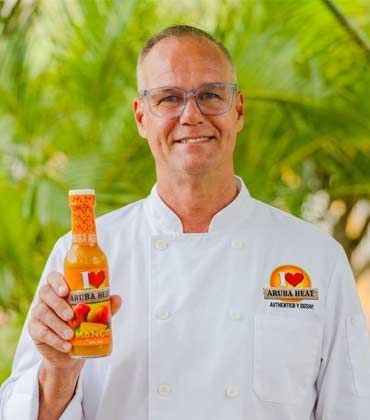
Crafting Flavor, Building a Brand
From Curiosity to Commercial Creativity
I have always loved traveling. When visiting foreign countries, you learn about their culture, culinary traditions and new ideas. During one of my cruise trips through the Caribbean, I noticed that many of the islands had several local hot sauce brands, while in Aruba there was only one commercially available local hot sauce at the time. That observation sparked an idea, and that is how I entered the hot sauce business.
I immediately started experimenting with ingredients and flavors, and soon after, I brought not one but three new sauces to the market. At first, Aruba Heat was a side business, but over the years it gradually developed into a serious operation.
One of the biggest lessons from my journey has been learning to look at a product from two perspectives at the same time: as a creator and as a manufacturer. As a creator, you have the freedom to experiment, combine unexpected ingredients and develop something distinctive. As a manufacturer, you have to think about consistency, shelf life, sourcing, production efficiency, packaging and whether you can reproduce that same experience thousands of times.
That combination has shaped the way I develop products today. I still enjoy experimenting, but I have become much more disciplined about turning creativity into something that can actually succeed commercially.
After almost two decades in this industry, I still believe there is plenty of room for innovation in hot sauce. It is a relatively simple product on the surface, but the possibilities for flavor are almost endless.
Scaling without Losing the Artisan Soul
Many artisan hot sauce makers begin with the smallest batches, perhaps 10 or 20 bottles. As the product gains popularity and reaches more customers, production gradually grows. Meanwhile, the producer is often still working a regular job and spending evenings and weekends trying to meet demand.
At some point, one of the biggest decisions is knowing when to take the risk of turning that side business into a full-time business. Giving up the security of a 9-to-5 job to pursue something you created yourself can be an exciting but difficult step.
Another major challenge that comes with growth is scaling without losing what made the product special in the first place. Small producers often begin with great recipes and a very hands-on production process. But growth changes everything. Ingredient availability becomes more important, production methods need to become more efficient, retailers expect consistency, food safety requirements become more demanding and margins come under pressure.
For artisan producers, I believe the answer is professionalization without industrializing the soul out of the product. Of course, we need better processes, better equipment, stronger quality control and smarter distribution, but we should never forget why customers chose an artisan product in the first place.
Protecting Creativity, Quality and Authenticity
Creativity is probably the easiest part for me. I have a habit of writing down new ideas, and over the years I have created quite a list of possibilities for new products. The discipline, however, lies in the timing and deciding when and which ideas deserve to become commercial products.
Once a new product reaches the market, it takes time for the public to get to know it. Dedicated marketing and promotion need to be put in place while maintaining timely production and distribution. At the same time, consistency becomes a promise. Someone who buys a bottle today should have essentially the same experience when they buy it again six months later.
That requires standardized recipes, controlled processes and sometimes accepting that an interesting experiment is simply not suitable for commercial production.
At the same time, I believe consistency should never eliminate the personality and character of an artisan product. My approach is therefore to protect three things: the identity of the product, the quality of the ingredients and the experience we promise the customer.
Production methods can evolve, equipment can improve and the company can grow, but those three things should remain recognizable.
The Evolution of Culinary Heat
Even though new and hotter pepper varieties continue to be developed, I believe the industry will shift from heat-focused products toward culinary heat products.
Heat is becoming more sophisticated. Consumers are exploring different cuisines and are increasingly interested in fermented flavors, fruits, spices, unusual peppers and combinations that might have been considered unconventional years ago. They are also using hot sauce differently. Not only as a condiment, but as an ingredient in cooking, marinades, dressings, desserts and even cocktails.
I also expect sustainability and transparency to become increasingly important. Consumers want to know what is in a product, where ingredients come from and how it is produced. This will encourage manufacturers to invest in cleaner and more efficient production technologies, better packaging and more responsible sourcing.
Another important development is e-commerce. An artisan producer no longer has to think only about the local supermarket shelf. Growing online sales allow regional flavors to reach consumers all over the world.
At Aruba Heat, we are very excited about this development. As a small hot sauce manufacturer from the Caribbean, we can participate in a global market without having to become a generic global brand.
Creating Food Brands that Stand Apart
The great-tasting sauce you bring to your Sunday BBQ is the beginning, not the business. Do not only fall in love with your product but also learn to understand the business around your product.
You have to understand costing, production, inventory, food safety, packaging, branding, distribution, cash flow and sales. Some of those things may not be as exciting as developing a new flavor, but they determine whether your idea flies or not.
I would also tell emerging entrepreneurs not to wait until everything is perfect. Food entrepreneurship involves constant learning. Make something, test, taste, listen, improve and try again. Some ideas will work and others will not. Both teach you something.
And finally, build something that has a reason to exist. There are already thousands of sauces, snacks, beverages and specialty foods competing for attention. Ask yourself: Is what I am bringing genuinely mine? It might be your culture, your ingredients, your story, your creativity or simply your own way of looking at food. That makes it much more difficult for a competitor to copy, and ultimately, that is what can turn a product into a brand.
I have always loved traveling. When visiting foreign countries, you learn about their culture, culinary traditions and new ideas. During one of my cruise trips through the Caribbean, I noticed that many of the islands had several local hot sauce brands, while in Aruba there was only one commercially available local hot sauce at the time. That observation sparked an idea, and that is how I entered the hot sauce business.
I immediately started experimenting with ingredients and flavors, and soon after, I brought not one but three new sauces to the market. At first, Aruba Heat was a side business, but over the years it gradually developed into a serious operation.
One of the biggest lessons from my journey has been learning to look at a product from two perspectives at the same time: as a creator and as a manufacturer. As a creator, you have the freedom to experiment, combine unexpected ingredients and develop something distinctive. As a manufacturer, you have to think about consistency, shelf life, sourcing, production efficiency, packaging and whether you can reproduce that same experience thousands of times.
That combination has shaped the way I develop products today. I still enjoy experimenting, but I have become much more disciplined about turning creativity into something that can actually succeed commercially.
After almost two decades in this industry, I still believe there is plenty of room for innovation in hot sauce. It is a relatively simple product on the surface, but the possibilities for flavor are almost endless.
Scaling without Losing the Artisan Soul
Many artisan hot sauce makers begin with the smallest batches, perhaps 10 or 20 bottles. As the product gains popularity and reaches more customers, production gradually grows. Meanwhile, the producer is often still working a regular job and spending evenings and weekends trying to meet demand.
At some point, one of the biggest decisions is knowing when to take the risk of turning that side business into a full-time business. Giving up the security of a 9-to-5 job to pursue something you created yourself can be an exciting but difficult step.
Another major challenge that comes with growth is scaling without losing what made the product special in the first place. Small producers often begin with great recipes and a very hands-on production process. But growth changes everything. Ingredient availability becomes more important, production methods need to become more efficient, retailers expect consistency, food safety requirements become more demanding and margins come under pressure.
For artisan producers, I believe the answer is professionalization without industrializing the soul out of the product. Of course, we need better processes, better equipment, stronger quality control and smarter distribution, but we should never forget why customers chose an artisan product in the first place.
Protecting Creativity, Quality and Authenticity
Creativity is probably the easiest part for me. I have a habit of writing down new ideas, and over the years I have created quite a list of possibilities for new products. The discipline, however, lies in the timing and deciding when and which ideas deserve to become commercial products.
Once a new product reaches the market, it takes time for the public to get to know it. Dedicated marketing and promotion need to be put in place while maintaining timely production and distribution. At the same time, consistency becomes a promise. Someone who buys a bottle today should have essentially the same experience when they buy it again six months later.
That requires standardized recipes, controlled processes and sometimes accepting that an interesting experiment is simply not suitable for commercial production.
At the same time, I believe consistency should never eliminate the personality and character of an artisan product. My approach is therefore to protect three things: the identity of the product, the quality of the ingredients and the experience we promise the customer.
-
Heat grabs your attention, but Flavor creates the memory!.
Production methods can evolve, equipment can improve and the company can grow, but those three things should remain recognizable.
The Evolution of Culinary Heat
Even though new and hotter pepper varieties continue to be developed, I believe the industry will shift from heat-focused products toward culinary heat products.
Heat is becoming more sophisticated. Consumers are exploring different cuisines and are increasingly interested in fermented flavors, fruits, spices, unusual peppers and combinations that might have been considered unconventional years ago. They are also using hot sauce differently. Not only as a condiment, but as an ingredient in cooking, marinades, dressings, desserts and even cocktails.
I also expect sustainability and transparency to become increasingly important. Consumers want to know what is in a product, where ingredients come from and how it is produced. This will encourage manufacturers to invest in cleaner and more efficient production technologies, better packaging and more responsible sourcing.
Another important development is e-commerce. An artisan producer no longer has to think only about the local supermarket shelf. Growing online sales allow regional flavors to reach consumers all over the world.
At Aruba Heat, we are very excited about this development. As a small hot sauce manufacturer from the Caribbean, we can participate in a global market without having to become a generic global brand.
Creating Food Brands that Stand Apart
The great-tasting sauce you bring to your Sunday BBQ is the beginning, not the business. Do not only fall in love with your product but also learn to understand the business around your product.
You have to understand costing, production, inventory, food safety, packaging, branding, distribution, cash flow and sales. Some of those things may not be as exciting as developing a new flavor, but they determine whether your idea flies or not.
I would also tell emerging entrepreneurs not to wait until everything is perfect. Food entrepreneurship involves constant learning. Make something, test, taste, listen, improve and try again. Some ideas will work and others will not. Both teach you something.
And finally, build something that has a reason to exist. There are already thousands of sauces, snacks, beverages and specialty foods competing for attention. Ask yourself: Is what I am bringing genuinely mine? It might be your culture, your ingredients, your story, your creativity or simply your own way of looking at food. That makes it much more difficult for a competitor to copy, and ultimately, that is what can turn a product into a brand.
MORE FROM INSIGHTS

Food Safety and Quality Consultants, LLC
Arlen Keller, President, Food Safety and Quality Consultants, LLC
Food Safety and Quality Consultants: Practical Food Safety Culture Planning in an Ever-Changing Industry

Mayekawa USA
Jiro Kobayashi, Business Development Advisor, Food Division, Mayekawa USA
Why are meat plants investing in automation today?

Kirkman
Nick Chiacchiaro, Marketing Manager, HTO Nevada d.b.a. Kirkman
Two Great Products from a Kirkman®-a Trusted Brand for more than 7 Decades

Clark Influence
Valentine Fourmentin, Senior Business and Project Development Manager
Shaping the Future of Food Service: 5 key marketing takeaways from SIAL Toronto
EXPLORE OUR KNOWLEDGE NETWORK
The articles from these contributors are based on their personal expertise and viewpoints, and do not necessarily reflect the opinions of their employers or affiliated organizations.
