
Thank you for Subscribing to Food Business Review Weekly Brief
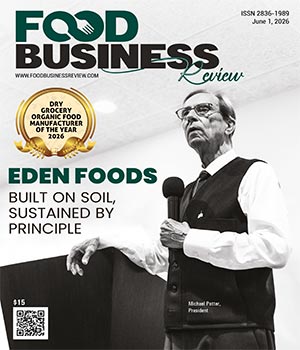
What principles define Eden Foods’ long-term approach to purity and food production philosophy? In an industry often defined by scale, speed, and market capture, Eden Foods has spent nearly six decades pursuing a quieter, more deliberate ambition: purity. Under the stewardship of Michael Potter, the company’s trajectory reflects not a race against competitors, but a sustained commitment to redefining what food should be at its most fundamental level. That distinction, subtle yet profound, shapes every dimension of Eden Foods’ philosophy, from sourcing and production to its broader role within the organic movement. The origins of the company are neither corporate nor strategic in the conventional sense. They are deeply personal. In the late 1960s, a small group of young adults in Ann Arbor, Michigan, became increasingly aware of the growing adulteration of commercial food. Their concern was not abstract. It was immediate and intimate, tied to their own lives and the families they hoped to build. As Potter explains, “the goal was to get good food for our children.” What began as a self-centered pursuit of unadulterated nourishment gradually evolved into a broader ethos, one that now extends to communities, consumers, and future generations.
Canned Food and Beverages
Every day, Manning Sumner’s phone lights up with the same uplifting message from different customers, that they always keep a can of NO DAYS OFF Premium Wateron their work desk. For them, the water line launched by Sumner is a strong reminder of the movement it represents—never taking a day off in becoming their best selves. This journey began over 15 years ago when Sumner set up his first gym in Miami, driven by the ‘NO DAYS OFF’ ethos. Soon, the venture grew into eight locations across South Florida and Nashville, building a community of over 3,000 members. Today, NO DAYS OFF has become a social movement, hashtagged about seven million times a month with thousands of dedicated online followers. For a community built on discipline and intention, what they consumed daily had to be worthy of that commitment. NO DAYS OFF Premium Water was born to meet that demand. “I wanted to create something that went beyond a simple beverage, something that people could attach to their lives,” says Sumner. How does advanced water processing influence purity, consistency and hydration performance in premium beverages? A Disciplined Water Production Mechanism In the beverage industry, premium water is marketed as the purest form, obtained from natural sources like glaciers and springs. However, as environmental conditions change, natural sourcing alone no longer guarantees purity. At NO DAYS OFF Premium Water, top quality is determined via rigorous processing, consistent testing and careful packaging. The company follows a seven-step reverse osmosis process, removing microscopic impurities more thoroughly than conventional filtration systems. The water is treated with ultraviolet light and tonal pasteurization before third-party testing. A proprietary electrolyte blend, developed over 18 months through extensive testing and collaboration with water sommeliers, is then.

Supplement

When was the last time you heard someone say, “I can’t wait to take my supplements tonight”? Probably never. A wellness routine should inspire, not weigh you down. Yet most routines focus on checking boxes rather than enjoying the moment. Many people abandon them when the daily ritual feels bland or clinical. For supplement brands, the challenge is delivering efficacy while creating something consumers want to repeat. TopGum, a global leader in functional nutrition, believes it does not have to be that way. Specializing in sugar-free, scientifically advanced supplement gummies, it has developed proprietary technologies like a patented prebiotic fiber base and microencapsulation. These allow complex health formulations to become enjoyable, high-dosage formats. From fertility and pregnancy to menopause and active aging, TopGum’s “Gummiceuticals” help people manage their health conveniently and delightfully. “Born out of confectionery, we have made it our mission to transform supplements into something people enjoy. For us, a gummy is a sensory experience, where flavor, aroma and color are integrated into the science so even difficult ingredients become a pleasure,” says Jeniffer Toomey, head of new product development, U.S. No two supplement brands are alike, because no two consumers are alike. Some companies arrive with a clear concept, while others only have a vision of what they want their product to look like. TopGum’s end-to-end model works for both, whether the need is a ready-made formula, a fully customized gummy or something in between. The journey begins with a dedicated sales manager who becomes the brand’s partner throughout. Their role is to listen and understand what the customer wants to achieve. If the solution exists in TopGum’s catalog, it can be offered immediately. More often, though, customers want something unique, which is where the development process comes into its own. Once a project moves beyond the catalog, the sales manager brings in TopGum’s product development team. Clients are encouraged to share every idea, even the wish list that feels out of reach. The R&D team translates those concepts into workable options. The outcome is a set of proposals that outline what can be done, highlight necessary adjustments, and include a top-line price estimate to keep the project aligned with its budget and goals.
Supplement Manufacturing
Hymato Products Ltd. is renowned for its collection of humic and fulvic acid-based products, enriched with nearly all essential minerals. Guided by CEO and chemical engineer Dr. János Csicsor’s vision to improve health, the company applies decades of scientific research to create safe, effective formulations that enhance wellbeing. Hymato develops food supplements, cosmetic formulations and functional food products while offering contract manufacturing and packaging services. “We develop complex products with several ingredients that work together to solve real health problems,” says Csicsor. This integrated formulation sets Hymato apart from manufacturers that rely on single-ingredient products. Through its in-house laboratory, the company creates multi-ingredient supplements that enhance nutrient absorption and health. Bringing Big Ideas to Life Hymato operates on two strong pillars: in-house product development and toll manufacturing. Through its research laboratory, it ensures rigorous quality control and humic acid analysis while collaborating with multi-level marketing companies, Hungarian firms and foreign organisations to deliver complete expertise from formulation to finished product. What makes Hymato different is its willingness to work with small and emerging companies that have product ideas but lack the production resources. While most toll manufacturers require minimum orders of about 100,000 bottles, Hymato offers flexible, small-batch production of 10 to 100 units, enabling new brands to test and refine products. The company provides scientific support that helps new businesses launch and grow confidently. Raising the Bar on Bioavailability Recognising the potential of liposomal production in improving nutrient absorption, Hymato invested in specialised equipment and advanced from laboratory trials to pilot-scale production. Liposomal technology is used for ingredients that don’t dissolve in water, since such compounds are absorbed poorly by the body. Hymato focused on key non-soluble nutrients like Q10, curcumin, glutathione and resveratrol, using liposomes to improve their absorption.

Beer and Wine

What historical legacy shapes the foundation and purpose of 10th Mountain Whiskey & Spirits? Some distilleries are built around a recipe. This one is shaped by a clear sense of purpose grounded in the region’s history. Ryan Thompson founded 10th Mountain Whiskey & Spirit Company in Vail, Colorado, twelve years ago, built on the belief that the mountain lifestyle, ski runs, and the freedom to experience the Rocky Mountain West were shaped in part by the soldiers who made them possible. The 10th Mountain Division trained in the region in the 1940s before fighting some of the most demanding campaigns of World War II. When soldiers came home, they did not simply return to civilian life. They helped build it. More than 60 ski resorts were founded by 10th Mountain veterans, including Vail Mountain itself, and the ski technology and mountain culture they shaped continue to define the region today. It is that legacy Thompson set out to honor when he founded the distillery, giving the brand a foundation that extends beyond product into how the company operates and makes decisions. “Without the courage and sacrifice of those who first answered the call’ and of those who continue to serve in defense of our freedoms’ none of this would exist; not this distillery, not this way of life, not the spirits we are privileged to create. It is a legacy we honor with humility, and a responsibility we will never take lightly,” says Thompson, CEO and founder. How do environmental factors and production methods influence the distillery’s product quality and consistency? Quality is closely tied to where the distillery operates. At 6,300 feet, the arid climate, low humidity, and wide temperature swings influence maturation and flavor development, based on the distillery’s observations. This environment is paired with a deliberate, hands-on process using a 500-gallon Vendome copper pot and column still for every batch. The distillery also uses Rocky Mountain snowmelt water, while all grains are sourced from Colorado farmers practicing non-GMO and regenerative agriculture.
Organic Food
Good packaging is a critical extension of product integrity and brand accountability in the cold-chain economy. For food and beverage companies, especially those handling perishable or temperature-sensitive SKUs, the box matters as much as what’s inside. A spoiled delivery doesn’t just cost a refund—it costs trust. That’s why companies across the U.S. rely on Polar Tech, where packaging is designed to protect the product and the reputation riding on it. Its insulated solutions go beyond maintaining precise temperature. They defend shipments against both thermal and physical shocks that are all too common in today’s distribution networks, from parcels stacked in crowded warehouses to packages dropped or jostled in last-mile delivery. Every box Polar Tech designs is test-validated under simulated field conditions, accounting for temperature volatility, vertical load-bearing and shock resistance. The goal is always to preserve product integrity across the last mile and beyond, even when conditions deviate from the plan, because real-world logistics don’t follow lab conditions. And with more than 300 container sizes and seven types of gel packs, brands gain unmatched flexibility to align packaging configurations with product perishability or even evolving sustainability standards, something high-growth F&B brands care about as they scale into regulated retail, cross-border exports or pharmaceutical-grade standards. “We engineer our containers to perform on every front,” says Autumn Santeler, general manager of operations. “Foam interiors shield against rough handling, superior insulation R-value ratings maintain steady temperatures and pre-printed handling instructions guide careful treatment, so every shipment arrives safe, fresh and as intended.” That commitment to protection is now meeting a new reality in the market; sustainability. As demand for cold-chain shipping grows, so does the volume of packaging moving through supply chains. Businesses now want solutions that keep goods safe while lowering their footprint. Polar Tech addresses this need with a biodegradable foam option that matches the performance of traditional packaging without incurring additional costs or complexity. Any of its 300-plus container designs can be made in this material, giving companies the flexibility to scale sustainably while maintaining uncompromising standards of temperature control and protection.

Confectionery

Food Safety Is Everyones Business
Suzanne Finstad, Vice President Of Food Safety And Quality Assurance (Fsqa), Tyson Foods
Vending Machines

A Strategic Approach to Product Marketing
Jessica Blondeel, Director of Communications and Digital Marketing, Puratos
Food Processing and Packaging

A Brief History of Packaging
Todd Jongen, Director Non-Foods Product Development and Packaging Science, US Foods
Food and Beverages Marketing
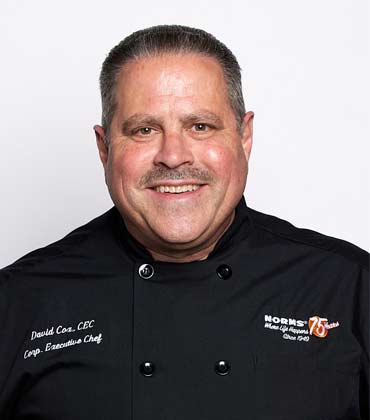
Scaling Menu Innovation Through Smarter Procurement Strategy
David Cox, Corporate Executive Chef/VP of Food & Beverage, Norms Restaurants
Food Safety

Rooted in Story, Community & Connection: Inside the Brand Philosophy of Sonder Brewing
Macie Brubaker, Marketing Director, Sonder Brewing

IN MY OPINION
Cold Chain
Food Safety Recalls: The Journey to Upholding Public Trust
Adeniyi.A. Odugbemi, PhD, Global Director -Food Safety, ADM

LAST WORD
Food Ingredients
Navigating the Future of Food
Jim Kappas, Vice President - Specialty Ingredients, ASR Group
IN FOCUS

Hydration Redefined: Exploring the Ultra-Premium Canned Water Market
Ultra-premium canned water products minimize the impact of plastic waste, enhance brand differentiation, and offer an extended shelf life along with improved product stability.
Meeting Sustainable Food Choices with Dry Grocery Organic Food Manufacturers
Dry grocery organic food manufacturers focus on clean ingredients, sustainable production, product innovation, and meeting growing demand for healthier pantry foods.
EDITORIAL
Food Systems Based On Consistency and Trust
The food industry in Europe has changed, and consumers are now focusing on ingredient quality and transparency in sourcing. Trust is increasingly based on consistent operations. Companies that build credibility through disciplined production and reliable sourcing feature in this edition of Food Business Review.
Our cover story recognizes Eden Foods as the Dry Grocery Organic Food Manufacturer of the Year 2026. The firm has spent decades building strong relationships with organic growers and suppliers rather than rapid growth. Its focus on soil quality, ingredient integrity and careful sourcing still guides the business today. That long-term mindset has allowed Eden Foods to maintain consumer confidence while maintaining a dependable network of farming and supply partners, carefully cultivated over time.
Also, companies are creating more consistency and rigorous processes to optimize operations. 10th Mountain Whiskey & Spirits is recognized as the Top Craft Spirits Producer 2026. It continues to focus on being a small producer, using only local Colorado-grown grain and authentic distilling techniques. Likewise, NO DAYS OFF Premium Water, recognized as Top Ultra-Premium Performance Canned Water Product 2026, built brand awareness with the same disciplined approach to purification, packaging, and a carefully targeted distribution strategy within the performance hydration industry.
Some of the leaders featured in this edition also discuss the operational realities shaping modern food businesses. Suzanne Finstad, Vice President of Food Safety and Quality Assurance at Tyson Foods, emphasizes how increased coordination across teams and preventative monitoring systems are impacting food safety practices across the industry. David Cox, Corporate Executive Chef and Director of Purchasing for Norms Restaurants, discusses how supplier relationships, purchasing decisions and ingredient flexibility can drive menu innovation while ensuring operational stability.
The companies and perspectives profiled here reflect a wider change across the food industry toward reliability, operational discipline and long-term trust. We invite readers to explore the perspectives, experiences and insights shared throughout this edition.
