
Thank you for Subscribing to Food Business Review Weekly Brief


 Camilo Rosales, Founding Partner and CEO
In international trade, a promise can take weeks to fulfill. For example, a shipment of dried fruit leaving Chile may have 60 days or more ahead of it before reaching its destination. For the buyer, that is a long time to wait and a long time for circumstances to change. Freight rates can shift, ports can close, containers can become scarce, and transit times can stretch.
For the buyer, the real question is whether everything promised at the beginning will still hold when the shipment arrives. Was it the quality they agreed on? Did it arrive when they needed it? Was everything handled the way it was promised?
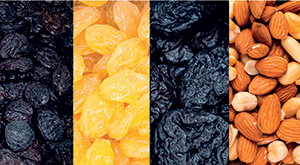
Atacama Dried Fruits and Nuts has built its reputation on making sure that promise survives the journey. Founded in Chile in 2019, Atacama exports dried fruits and nuts to markets around the world, with strong business across the Middle East and North Africa. Its portfolio spans raisins, almonds, prunes, walnuts and dried cherries in multiple formats, sizes and specifications.
“We were also pioneers in bringing consignment into the dried fruit and nuts trade, giving trusted customers the option to settle based on the product's quality and market outcome after arrival rather than fixing the final price upfront,” says Camilo Rosales, founding partner and CEO.
But for Atacama, the real product is confidence. Rosales is clear about what buyers are actually looking for. Quality is no longer something a supplier can use to distinguish itself. Neither is attractive packaging or a specification sheet that matches the order. Those are requirements. What separates one supplier from another is what happens after the order is placed. That is why Atacama treats communication as a core part of the shipment.
Keeping the Customer Close
A buyer in another part of the world cannot walk into Atacama's facility, inspect every load and follow a container to port. The company bridges that distance through a deliberately hands-on logistics operation.
We were also pioneers in bringing consignment into the dried fruit and nuts trade, giving trusted customers the option to settle based on the product's quality and market outcome after arrival rather than fixing the final price upfront.
It limits each logistics executive to no more than 80 containers a year, giving them enough capacity to stay involved with customers rather than turning communication into a volume game. The company also sets clear response expectations. Critical questions are answered within 24 hours, regardless of the day or time, while other questions are addressed within 48 hours.
That standard extends to the people handling the relationship. Every logistics executive is expected to communicate fluently in English by phone and email because resolving an international shipment problem cannot wait for messages to pass through layers of translation or delay.
Then comes something more tangible. Once the customer books the fruit and Atacama processes it, the company takes representative photographs and videos of the finished product and sends them to the buyer, including through WhatsApp. The customer can see what has actually been processed before the product begins its journey across the ocean.
And there is plenty that can interfere with that journey. Over the past several years, international logistics has been repeatedly disrupted by COVID-19, wars, changing oil prices, container shortages and volatile ocean freight rates. Transit times have shifted, ports have closed and containers have ended up in the wrong places. At the same time, weather has become another major variable for agricultural products.
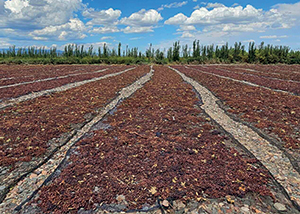 Atacama therefore does not automatically choose the cheapest shipping option. The company works with five, six or even seven shipping lines rather than tying itself to one option, weighing transit time against freight cost. Sometimes the most expensive service is the right one because it gets the fruit there faster.
“If that gives the customer a better chance of receiving the product when needed, we are prepared to pay more for the route,” says Rosales.
That philosophy extends to paperwork, too. Import requirements differ from one market to another, and the right fruit can still become the wrong shipment if the documentation is incomplete. Atacama supports customers through those requirements because, in its view, customs paperwork is just as much a part of successful delivery as product quality.
When Solving the Problem Matters More Than Protecting the Margin
A company's customer relationships become most revealing when circumstances go wrong. One customer in Tunisia needed Flame Super Jumbo raisins before Ramadan. The product was ready, but conventional dry-container transit times made the deadline difficult to meet. A reefer container offered a solution, arriving roughly 30 days faster but at about twice the cost.
Atacama could have simply declined. Instead, the company worked with the customer to share the additional cost of the faster shipment. By reaching an agreement and sharing the extra expense, both sides worked together to meet the deadline and get the product there in time for the market.
-
We are already adapting our loading practices for dry containers, protecting the fruit with special interior materials and cardboard barriers that keep the cartons from coming into direct contact with the container's metal walls.
Another customer in the Philippines wanted a raisin specification with no more than five capsules per pound. A typical specification allows up to 15. Chile could not produce it economically because the labor required to achieve the specification would push the price too high. Argentina offered a different equation. Atacama already had access to a capable factory and team there, and the country's cost structure made the requested quality achievable at a price the customer could support. The company began developing the product and moved toward sending a sample for approval.
This is where Atacama's wider sourcing network becomes an advantage. Chile remains its principal source, but joint-venture arrangements in Argentina and South Africa extend its reach. Partners can process products under Atacama's brand, bringing their production capabilities together with Atacama's market knowledge, network and customer relationships.
So when Chile is sold out of Black Jumbo raisins, Atacama can look to South Africa. When Flame Medium is unavailable in Chile, Argentina can offer another route. The customer does not have to start the search again.
A Supply Chain Built Around People
Atacama's network is not limited to suppliers and customers. The team inside the company is its actual engine, and the company puts real investment behind that belief. Employees are paid above the Chilean average for their roles and receive performance-based incentives tied to their responsibilities. Reviews take place every six months and at year-end, while Atacama is also working toward a profit-sharing model.
 For a company that makes communication and service such a central part of its business, that commitment matters. Logistics executives need to do more than move containers. They need to communicate clearly, solve problems and stay close to customers when plans change. Atacama believes those qualities come from people who feel respected, valued and genuinely connected to the work.
That same philosophy shapes what Atacama is trying to achieve in the market. Rosales describes the company's ambition as ‘democratizing the price’ of dried fruit and nuts. Instead of building the business around maximizing profit on every shipment, Atacama focuses on volume, competitive pricing and reaching more customers. The thinking is that better prices can make healthy products more accessible to more people.
That approach shapes how the company deals with growers. Atacama is both a grower and a dryer, while also purchasing raw material from other producers. That gives its team a direct understanding of what is at stake for farmers. A grower may work for an entire year for a single harvest, with that harvest representing the family's income for the year.
The company therefore tries to avoid speculation and information asymmetry in its supplier relationships. It does not intentionally withhold market information to secure a better deal at a grower's expense. When growers need financing, Atacama provides it without using that support as leverage to extract a better deal.
That matters particularly with small growers. A farmer working one hectare may depend on a single annual harvest to support the family for the year. Atacama treats that crop accordingly, regardless of whether the grower manages one hectare or 1,000.
Flexibility Becomes Part of Product Quality
The company is also watching a change that could reshape how dried fruit moves around the world. Dried fruit may be semi-perishable, but rising temperatures during transit are creating new risks, particularly for more delicate products such as golden raisins. Higher temperatures can affect color, quality and shelf life during a long ocean journey.
Atacama has therefore begun giving customers reefer-container options for products that need additional protection. Reefer freight is more expensive, so the market is still moving through a transition. But as temperatures continue to create greater pressure on sensitive products, Rosales expects reefer shipments to become increasingly important in the dried-fruit and nut trade.
“We are already adapting our loading practices for dry containers, protecting the fruit with special interior materials and cardboard barriers that keep the cartons from coming into direct contact with the container's metal walls,” says Rosales.
That same flexibility appears in Atacama's approach to markets. Different regions want different products, sizes, colors and price points. The U.S., for example, buys predominantly medium raisins, while Middle Eastern and North African markets often seek jumbo sizes. Atacama's ability to work across formats and sources allows it to adjust rather than force every customer into the same offering.
Trust That Compounds
Perhaps the boldest example of that trust is Atacama's approach to consignment. In Chile, consignment is common in fresh fruit, where growers may receive a final settlement based on the quality and market price achieved after the fruit reaches its destination. That model is unusual in dried fruit and nuts, where firm pricing is the norm.
Atacama has brought consignment into dried fruit and nuts, working with established customers in markets including Lebanon, the Netherlands, Turkey and China. The company sends fruit to trusted customers and receives a final settlement based on the product's quality and market outcome.
 For Atacama, the model also changes how the relationship works. Instead of spending time negotiating a firm price for every container, the company can put more attention on quality, execution and the final result in the market. It can also support higher volumes while giving both sides a reason to protect the product and the relationship.
That kind of arrangement only works when both sides trust each other. And trust, for Atacama, is not an abstract value. It is something built into the way the company buys, sells, ships and solves problems. It is also why Atacama can afford to be selective about whom it works with. The company chooses customers and suppliers whose approach aligns with its own rather than chasing every available transaction.
For Atacama, the goal is not to win a customer for one container. It is to become the supplier a customer can call when the requirement changes, the market moves or the shipment suddenly becomes difficult. That is why the company keeps investing in its people, its sourcing network, its logistics capability and, above all, the relationships connecting them.
In a business where the buyer may wait two months to discover whether a promise was kept, Atacama is building its reputation on making sure the answer is already clear before the container arrives.
Reliable Dried Fruit Supply Across Global Markets
International dried fruit buying often looks simple on the contract and becomes less simple once the container leaves the origin. The product can spend weeks in transit and pass through several handoffs before reaching customs. By then, the buyer is exposed to decisions made much earlier at the processing plant or booking desk. A lower purchase price loses its appeal quickly when fruit arrives outside specification or sits at port because documents cannot be cleared. The exporter, therefore, has to be judged on more than grade and price. Buyers need evidence that the agreed product will survive the distance and that the shipment will remain manageable while it is moving.
Consistency across shipments deserves scrutiny. Dried fruit is more forgiving than fresh produce, yet color, moisture, size and condition can still vary between lots or deteriorate during long routes. A sample can establish the target, but it does not prove that later containers will match it. Repeatable processing and careful loading matter here, especially when orders grow beyond one-off purchases. Sourcing control matters just as much. An exporter that buys from outside growers needs enough knowledge of the fruit and enough influence over preparation to keep the finished product within the agreed range. Variety is useful only when it does not introduce unwanted variation.
“Atacama limits each logistics executive to no more than 80 annual loads, giving customers a defined point of contact throughout shipment execution.”
Shipment management carries a similar weight. International buyers rarely judge an exporter only by what happens inside the plant. Vessel schedules change, and transit times can stretch. Customs requirements also differ sharply by destination, turning a minor documentation error into storage costs or delayed availability. The practical question is whether someone owns the shipment after the purchase order is issued. Buyers should look for defined response times and direct access to staff who understand the load. Freight selection deserves the same discipline. The cheapest booking may be the wrong choice when a faster route better protects product condition or an urgent delivery window.
Market fit becomes more important as an exporter serves multiple regions. Preferences for raisin size, color, prune condition and pack format can differ substantially from one destination to another. Price tolerance can shift just as quickly. A useful exporter should be able to match the specification without pushing every customer toward one standard offer. Broader sourcing relationships can also matter when a harvest is tight or a particular grade sells out at origin. That flexibility is only valuable when the alternative source is held to the same product expectations and shipment controls. Buyers should view sourcing breadth as a continuity tool, not a substitute for consistency.
Atacama Dried Fruits fits this buying profile as a premier choice because its model is built around shipment control and long-term trading relationships rather than spot transactions alone. It limits each logistics executive to no more than 80 annual loads, giving customers a defined point of contact throughout shipment execution. Its range covers raisins, prunes, walnuts, almonds and dried cherries in multiple formats, while its network extends beyond Chile when comparable supply is required. Atacama also provides representative shipment photos and video during processing, then works to keep the delivered fruit aligned with what was approved. Its 2024 volume reached 7,350 tons, giving buyers evidence of meaningful export scale without losing the service discipline described above.
...Read more
Company :
Atacama Dried Fruits and Nuts
Management Camilo Rosales, Founding Partner and CEO
Description
Atacama Dried Fruits and Nuts is a Chilean exporter connecting growers with global markets through quality dried fruits and nuts, responsive logistics and flexible sourcing. Founded in 2019, the company serves diverse markets with raisins, almonds, prunes, walnuts and dried cherries while building long-term relationships across the supply chain.
