
Thank you for Subscribing to Food Business Review Weekly Brief


 David Gaver, VP of Sales and Recruiting
If one asks David Gaver, VP of Sales and Recruiting, what APEX Hood Cleaning really sells, the answer protects far more than a kitchen.
“Our work goes beyond keeping commercial kitchen exhaust systems clean. Its about reducing fire risk, protecting lives and livelihoods and helping businesses operate safely,” he says.
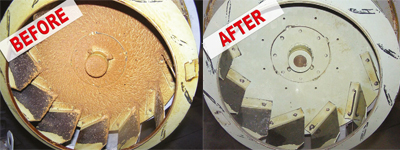
A passed inspection keeps a restaurant open, its insurance valid and its people working. Grease collects inside kitchen hoods, ducts and rooftop fans daily, invisible until a flame finds it and shuts a kitchen down. APEX has built its business on that risk since day one. APEX opened in 1978 to reduce fire danger by properly maintaining commercial kitchen exhaust systems, knowing that grease buildup ranks among the greatest hazards in any kitchen. Removing grease on schedule prevents fires from starting and that purpose still drives every job across Washington, Oregon, Idaho and California.
Built to Be Easy to Work With
 When Craig and Melissa Wood bought APEX in 2007, they traced customer frustration to a cause unrelated to cleaning quality. Rivals missed appointments and went quiet between visits. Their documentation did not line up with completed work, so clients felt like nothing more than accounts. The Woods rebuilt around the opposite promise. Answering the phone, arriving when promised and delivering exactly what was quoted turned reliability into the product and being easy to do business with became the company’s strategic identity. Keeping those promises consistently sets APEX apart from its competitors. For a busy operator, that reliability means one less vendor to chase and one recurring risk handled without a second thought.
One Accountable Chain
APEX owns every link in the chain. As the largest self-performing hood cleaning company on the West Coast, it sends its own technicians to every job in every branch and never hands work to subcontractors, so a kitchen in Boise meets the same standard set in Sacramento. A dedicated customer service manager handles scheduling and relationships in each region, local production managers guide field crews and a director of operations maintains consistent standards across branches. People hold that chain together, so hiring starts with character.
-
Our work goes beyond keeping commercial kitchen exhaust systems clean. It’s about reducing fire risk, protecting lives and livelihoods and helping businesses operate safely.
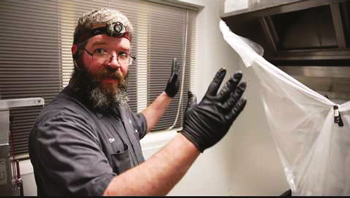
Technicians follow standardized procedures and train through APEX Academy. Their IKECA Certified Exhaust Cleaning Technician credentials keep them current as codes and equipment evolve. Each visit includes inspection notes, photos and management review. APEX starts with the first call, text, or email, gathering details on the hood, ductwork, rooftop fan and cooking volume. It assesses the setup on-site or through photos, recommends a service frequency and schedules the work without a contract. Immediately upon completion of service, customers receive an after-service report that provides proof for inspectors or insurers and flags deficiencies before they become violations.
Earning the Next Visit
APEX doesn’t require contracts. It keeps 98 percent of the over 6,000 locations it serves because performance alone has to earn the next visit. That discipline lifts standards and turns first-time clients into decade-long accounts. Steady service keeps a kitchen inspection-ready year-round and prepared when a deadline arrives.
 Food Business Review recognized APEX as the Top Commercial Kitchen Exhaust Cleaning Services of 2026, reflecting the same reliability customers experience every quarter.
Customer trust has also driven every expansion. When Red Robin asked APEX to bring its Pacific Northwest service into California, crews covered the first jobs through long road trips before APEX bought a Santa Rosa business to anchor the region.
Growth Driven by Customers
Customers wanted one partner for the whole kitchen, so APEX widened its scope to exhaust-system repair, rooftop fan service, access panels and hinge kits, catching faults before they become failures or code violations, at a lower cost than an HVAC contractor. With the new launch of APEX Fire Control, that accountability extends into fire suppression, moving toward one provider for cleaning, repair and compliance.
Gaver expects accountability, digital records and higher expectations to define the years ahead, with scarce skilled labor making people the real investment. Technology will sharpen the reporting. Character will still do the work.
Stay small as we get big, make it easy to do business with and never compromise on quality, says Gaver, tracing the growth back to one principle the team has held onto since the early days.
Cleaning That Protects Kitchen Continuity
A missed cleaning visit can leave a restaurant exposed long before grease buildup becomes visible. Fire inspectors, insurers and facilities teams may all expect proof that exhaust systems are being serviced at the right frequency, yet the work is often scheduled after hours and completed out of sight. For executives managing one site or a distributed portfolio, the purchasing question is not simply whether a contractor can remove grease. It is whether the provider can make fire prevention easier to verify and less likely to disrupt service.
Coverage quality begins beyond the hood surface. Grease can collect through ductwork and around rooftop fans, creating hidden exposure when crews focus only on accessible areas. A credible provider should inspect the exhaust system from hood to rooftop fan and document what was cleaned. It should also flag deficiencies that fall outside routine service. Photographs and post-service records matter because restaurant leaders may need evidence for internal reviews, insurance requests, fire inspections or lease compliance months after the visit. Documentation that arrives late or lacks detail weakens the value of otherwise acceptable work.
Scheduling discipline carries equal weight. Commercial kitchens have narrow service windows, changing production demands and limited tolerance for missed appointments. Poor communication can force managers to remain on site unnecessarily or delay opening preparations. Multi-location operators face another layer of difficulty. They need uniform reporting and service standards across markets without losing local coordination. Contractors that depend heavily on loosely managed third parties may struggle to provide the same result from one location to the next.
Scheduling discipline carries equal weight. Commercial kitchens have narrow service windows, changing production demands and limited tolerance for missed appointments. Poor communication can force managers to remain on site unnecessarily or delay opening preparations. Multi-location operators face another layer of difficulty. They need uniform reporting and service standards across markets without losing local coordination. Contractors that depend heavily on loosely managed third parties may struggle to provide the same result from one location to the next.
Training is another practical dividing line. Exhaust systems differ by building layout, cooking volume, equipment condition and access constraints, so technicians need more than basic cleaning skills. Buyers should look for structured instruction and field oversight, backed by periodic quality checks. Certification is useful, but it does not replace a company process that catches inconsistent work before it becomes a customer problem. Staffing continuity also deserves attention because high turnover can lead to uneven inspections and repeated retraining at customer sites.
"APEX Hood Cleaning connects commercial kitchen exhaust cleaning with the communication, documentation and follow-through needed to keep fire-prevention programs on track. It self-performs its work across its regional footprint and uses standardized procedures supported by ongoing training, quality audits and management oversight."
The service model should also account for what happens between cleanings. Fans, access panels, hinge kits and grease containment equipment can affect whether the exhaust system remains serviceable. A contractor that identifies repair needs early may help a kitchen avoid emergency calls or failed inspections. Scope must remain clear, however. Buyers should know which issues the provider can correct directly and which require another trade. Service frequency should reflect cooking volume and system condition rather than a convenient fixed schedule.
APEX Hood Cleaning connects commercial kitchen exhaust cleaning with the communication, documentation and follow-through needed to keep fire-prevention programs on track. It self-performs its work across its regional footprint and uses standardized procedures supported by ongoing training, quality audits and management oversight. Each job includes inspection and service documentation, while dedicated customer service managers coordinate scheduling and client relationships by region. APEX also provides fan service, preventive maintenance, access-panel and hinge-kit work, filter replacement and related exhaust-system repairs, helping customers address identified deficiencies through the same service relationship when those needs fall within its scope. For independent restaurants and multi-location operators alike, its self-performing model keeps responsibility for scheduling, cleaning quality and documentation with one accountable provider.
...Read more
Commercial Kitchen Equipment Repair Services Info
Q1
What Are Commercial Kitchen Exhaust Cleaning Services Designed to Address?
Commercial Kitchen Exhaust Cleaning Services focus on removing grease and residue from the hood, ductwork and rooftop fan components that make up a kitchen exhaust system. The work is closely connected to fire prevention because grease can accumulate in areas that are not always visible during daily kitchen operations. Effective service also supports inspection readiness by helping organizations maintain a documented record of system maintenance. The value of Commercial Kitchen Exhaust Cleaning Services goes beyond surface cleaning. A complete service checks the condition and access of the entire exhaust system, identifies visible issues and provides records that can support inspections, insurance requirements and ongoing safety management.
Q2
How Does APEX Hood Cleaning Deliver Consistent Exhaust-System Service?
APEX Hood Cleaning provides Commercial Kitchen Exhaust Cleaning Services through a self-performing model that keeps responsibility for the work within its own organization. It sends its own technicians rather than subcontracting jobs across its branches, supporting a consistent approach across Washington, Oregon, Idaho and California. The company follows standard procedures and trains its technicians through APEX Academy. Its technicians hold IKECA Certified Exhaust Cleaning Technician credentials. After each visit, the company records inspection notes, takes photographs and conducts a management review. It then provides an after-service report that documents the completed work and any identified deficiencies.
Q3
What Should Organizations Look for When Evaluating Exhaust Cleaning Providers?
When evaluating Commercial Kitchen Exhaust Cleaning Services, organizations should consider more than whether a provider can remove visible grease. The scope of inspection, technician training, scheduling reliability and quality oversight can all affect whether the service supports an effective fire-prevention program. Documentation is another important factor. Service records and photographs can provide evidence of completed work long after a visit has ended. Organizations may also benefit from understanding how a provider identifies deficiencies, manages follow-up work and recommends service frequency based on factors such as cooking volume, system condition and equipment configuration.
Q4
Why Are Documentation and Scheduling Important to Kitchen Safety?
Commercial Kitchen Exhaust Cleaning Services often take place outside normal operating hours, so clear communication and good records are important. A missed appointment or incomplete record can cause problems even when the cleaning itself meets expectations. Detailed reports help organizations track cleaning and identify issues before they escalate. Reliable scheduling allows kitchen teams to plan around service times and minimize disruption. Clear records and regular follow-up simplify exhaust maintenance management.
Q5
How Does APEX Hood Cleaning Extend Support Beyond Routine Cleaning?
APEX Hood Cleaning connects Commercial Kitchen Exhaust Cleaning Services with related exhaust-system maintenance needs. Its service scope includes exhaust-system repair, rooftop fan service, access panels and hinge kits, allowing identified issues to be addressed through the same service relationship when they fall within its capabilities. The company has launched APEX Fire Control to expand into fire suppression. This broader approach addresses the link between cleaning, equipment condition, and fire-prevention requirements while maintaining clear service boundaries.
Q6
How Can Exhaust Cleaning Support Long-Term Operational Continuity?
Commercial Kitchen Exhaust Cleaning Services can help reduce the likelihood that grease accumulation, equipment deficiencies or incomplete maintenance records create unexpected operational problems. Consistent service can support ongoing inspection readiness rather than requiring attention only when a deadline or concern arises. For organizations managing multiple locations, consistency can become particularly important. Standardized procedures, trained technicians, clear reporting and accountable service coordination can help maintain a more uniform maintenance process across sites while allowing service needs to reflect individual system conditions.
Company :
APEX Hood Cleaning
Management David Gaver, VP of Sales and Recruiting
Description
APEX Hood Cleaning protects kitchens by removing fire-risk grease and delivering reliable, self-performed service across four states. With trained technicians, detailed reporting, exhaust-system repairs and expanding fire-suppression capabilities, APEX provides one accountable partner for safety, earning 98 percent retention and recognition as The Top Commercial Kitchen Exhaust Cleaning Service in 2026.